Luma Uni-1 AI image generator is a useful keyword to watch because image generation is moving from one-shot prompt output toward brief-driven, reference-aware creative workflows. For Makefun readers, the practical question is not only whether a new image model can produce attractive pictures. It is whether the workflow helps creators reason through prompts, references, edits, aspect ratios, and downstream video use.
Why Luma Uni-1 matters for AI image generation
Luma describes Uni-1 as part of a broader unified creative intelligence direction. The search opportunity is timely because creators are comparing model families not only by visual quality, but also by how well they understand a product brief, preserve subject identity, follow composition constraints, and support edits after the first generation.
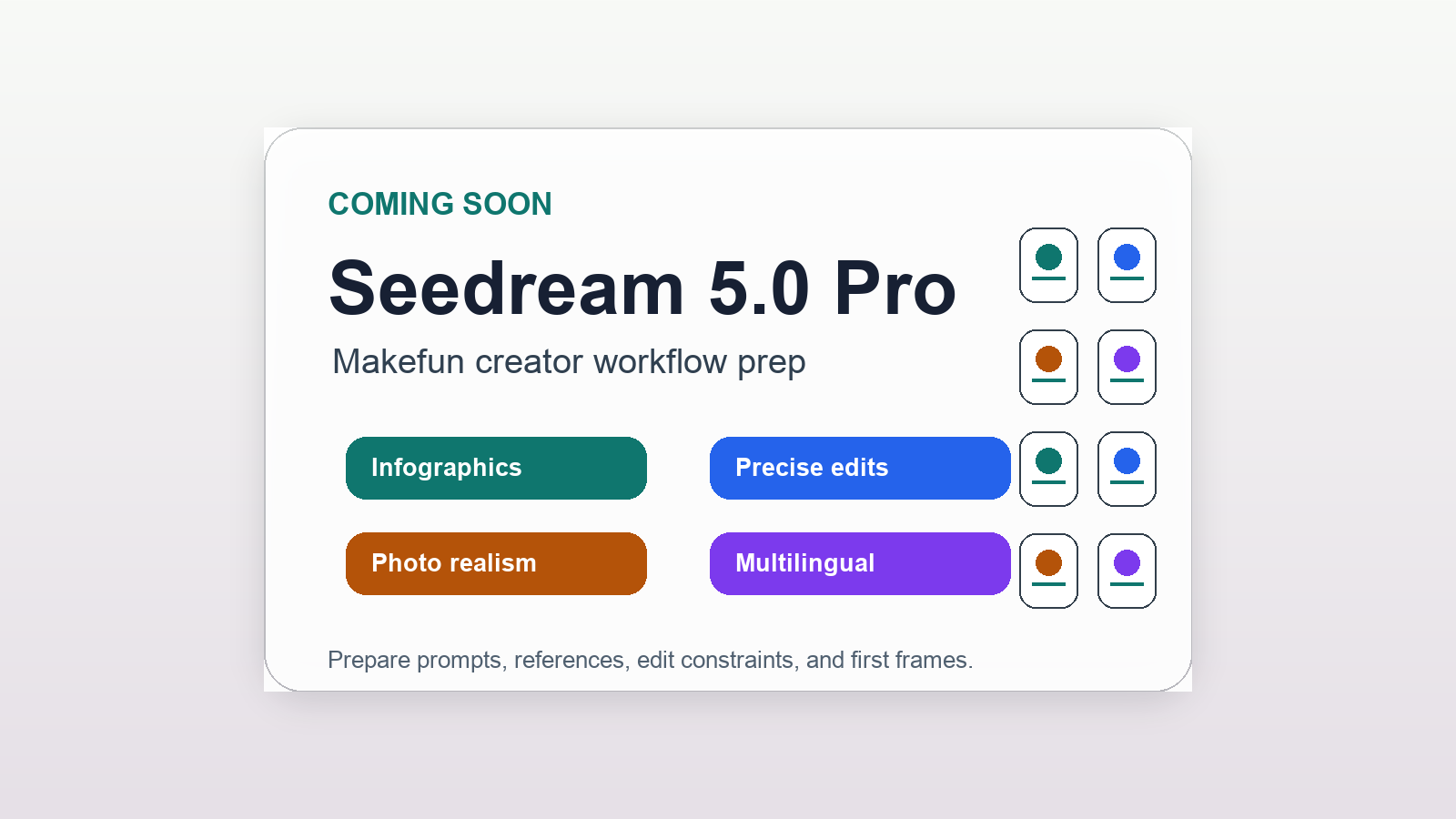
That makes this topic adjacent to Makefun’s existing image-model coverage. A user researching Uni-1 is likely also comparing tools such as Nano Banana Pro, Flux 2 versus Nano Banana Pro, Seedream 5.0 Lite, and Z-Image.
Reasoning is becoming part of image workflows
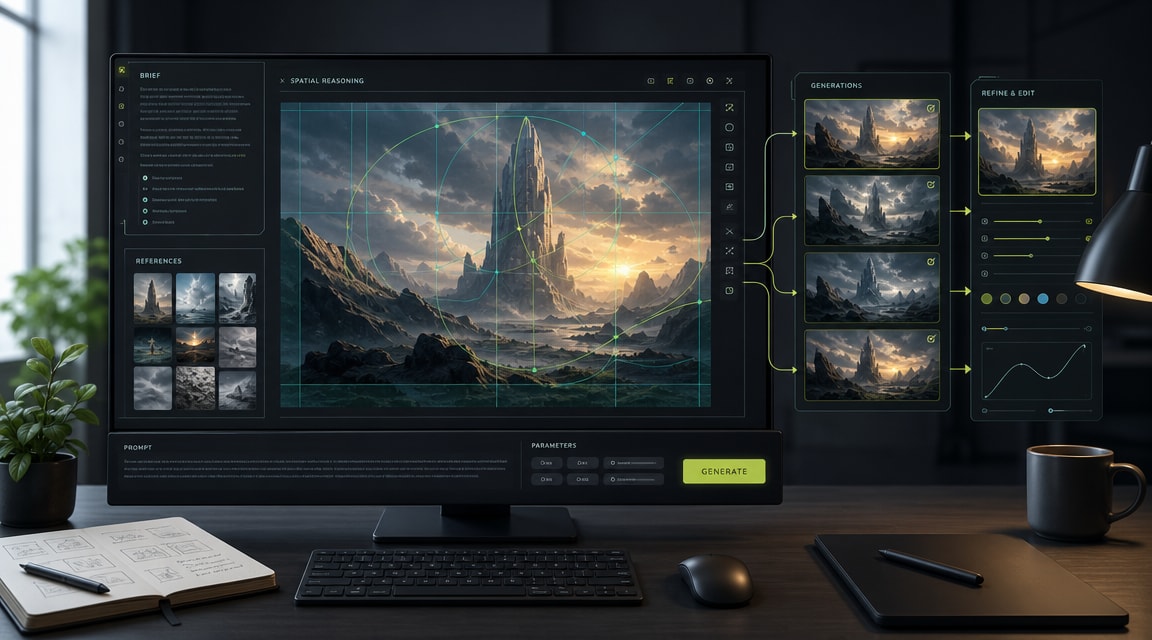
The strongest creator use case is not a single pretty render. It is a repeatable image workflow: start with a short brief, add reference images or visual constraints, generate several directions, then edit the strongest output for social, product, or video use. Uni-1-style positioning reinforces that AI image tools are becoming planning systems as much as rendering systems.
For SEO, this creates a long-tail search cluster around reasoning image generator, reference-aware image editing, AI image workflow, and all-in-one AI creator tools. Those searches fit Makefun because many users move from still images into image-to-video or model-comparison workflows after they create a strong source frame.
How creators should compare Uni-1 with other image models
Creators should compare Luma Uni-1 against other AI image models with a workflow checklist, not a single benchmark claim:
- Prompt understanding: Does the model follow the full creative brief or only the most obvious visual nouns?
- Reference control: Can it preserve subject, product, outfit, scene, or layout references across edits?
- Spatial reasoning: Does it keep objects, text-like elements, hands, tools, and perspective coherent?
- Editability: Can a creator refine the image without restarting from scratch?
- Video readiness: Does the output work as a clean source frame for image-to-video generation?
Where Uni-1 fits in an all-in-one creator workflow
TechCrunch’s launch coverage of Luma’s creative agents framed the broader direction as agentic creative work rather than isolated model calls. That pattern matters for Makefun because all-in-one creator workflows need image, video, audio, and editing steps to stay connected. A strong image model can be the starting point for storyboards, product shots, thumbnail systems, and source images for video generation.
A practical Makefun workflow is simple: use the image model that best follows the brief, turn the chosen frame into motion through image-to-video, then compare video models based on motion realism, prompt control, audio needs, and cost. This keeps the content neutral while giving searchers a clear next step.
FAQ
What is Luma Uni-1?
Luma Uni-1 is positioned as part of Luma’s unified creative intelligence direction. For SEO and creator workflow planning, it is useful to understand it as a model direction focused on reasoning, image generation, and creative control.
Is Uni-1 only for image generation?
The clearest Makefun angle is AI image generation and editing, but the broader trend is connected creative work across image and video. Searchers comparing Uni-1 will often also care about image-to-video and all-in-one creative pipelines.
How should I compare Uni-1 with Nano Banana Pro, Flux, Seedream, or Z-Image?
Compare the models by prompt following, reference consistency, spatial reasoning, editability, output quality, and how useful the image is as a source frame for video. A single leaderboard claim is less useful than checking the workflow you actually need.
Should Makefun users care about Uni-1?
Yes, as a market signal. Even when a specific model is not the final choice, Uni-1-style workflows show where AI image generation is heading: more reasoning, more references, and tighter links between image and video creation.