CrePal TVC Mode AI commercial video is a useful signal for where AI video tools are moving in 2026: from isolated text-to-video clips toward agent-led planning systems that shape the brief before generation starts.
Why TVC Mode matters for AI video workflows
Most AI video search demand still centers on prompts, image-to-video, model quality, and render speed. CrePal’s TVC Mode points to a more workflow-heavy intent: marketers want the AI system to help define characters, scenes, shots, brand tone, and campaign structure before spending credits on final video output.
That makes the keyword valuable for Makefun because it sits between three existing audience needs: agentic video generators, image-to-video production, and broader AI video generator trends.
What CrePal says TVC Mode adds
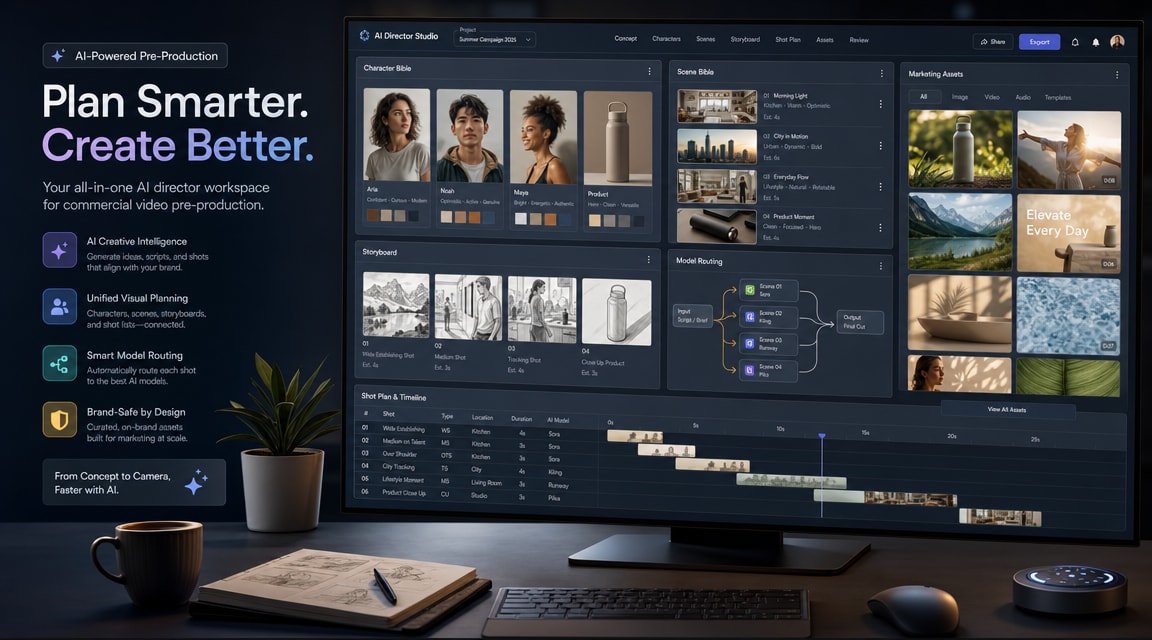
CrePal describes its product as an all-in-one AI video creation agent that can coordinate planning, image generation, video generation, music, voiceover, and editing in one workflow. Its current product page emphasizes an AI director-style interface for multi-scene videos, including scriptwriting, scene planning, model selection, and conversational edits.
Recent launch coverage frames TVC Mode as a pre-production layer for commercial-style videos. The core idea is straightforward: instead of asking a video model for one polished clip, the workflow first creates structured planning assets such as character bibles, scene bibles, shot plans, and storyboard direction.
Search intent fit for Makefun
People searching for this topic are unlikely to need only a product announcement. They are comparing workflow patterns: how to plan an AI ad, how to keep scenes consistent, how to turn a marketing brief into a storyboard, and how to choose between an agentic video tool and direct access to models such as Veo, Kling, Runway, Seedance, or image-to-video workflows.
Makefun can serve that intent by explaining the practical workflow without making broad competitor claims. A useful framework is:
- Brief: define the campaign goal, product promise, audience, and constraints.
- Character bible: document the people, avatar style, product role, wardrobe, and continuity rules.
- Scene bible: map locations, lighting, visual tone, product shots, and safety constraints.
- Shot plan: decide the opening hook, sequence, camera motion, captions, and calls to action.
- Generation: create or route image and video assets only after the plan is clear.
- Review: check brand safety, factual claims, licensing, voice, subtitles, and platform specs.
How this compares with the wider market
OpenArt, Higgsfield, Pollo AI, Adobe Firefly, Google Flow, Runway, and other tools are also pushing toward broader creative workspaces rather than single-model interfaces. The competitive pattern is clear: creators want fewer handoffs between planning, image generation, video generation, editing, and publishing.
The safer Makefun angle is not to rank these tools aggressively. The better SEO angle is to explain the workflow shift and connect it to Makefun’s own strengths around AI video creation, image-to-video, talking avatars, and production-ready media pipelines.
When to use an AI pre-production mode
An AI pre-production mode is most useful when the video has more than one scene, must preserve a product or character identity, or needs to match a campaign brief. For a quick social clip, direct image-to-video may be faster. For an ad, tutorial, explainer, product launch, or brand story, the planning layer can reduce wasted generations and make the final edit easier to review.
Teams should still treat generated plans as drafts. The final copy, claims, offers, endorsements, likeness rights, and brand safety checks need human review before publication.
Practical takeaway
CrePal TVC Mode is a timely long-tail topic because it captures a broader move from AI video generation to AI video production systems. Makefun should keep covering this category with neutral workflow guides that help creators understand when to use agent-led planning, when to use direct model generation, and how to turn image and video assets into reliable campaign content.
Sources checked for this article include CrePal’s current product page and current launch coverage of TVC Mode.