DeepSeek V4-Pro has become a timely API planning topic because its official pricing page shows the 75% V4-Pro discount turning into the standard quarter-price rate after 2026-05-31 15:59 UTC. For teams building AI agents, script planners, video workflow copilots, or API routers, that matters more than another benchmark headline: the unit cost of long-context tool use is changing.
This review focuses on what Makefun-adjacent builders should check before routing creator workflows to DeepSeek V4-Pro or V4-Flash. The short version is that DeepSeek now looks unusually inexpensive for long-context reasoning and tool loops, but teams still need to account for output volume, cache behavior, retry loops, latency, guardrails, and the cost of the surrounding media pipeline.
What changed in DeepSeek V4 pricing
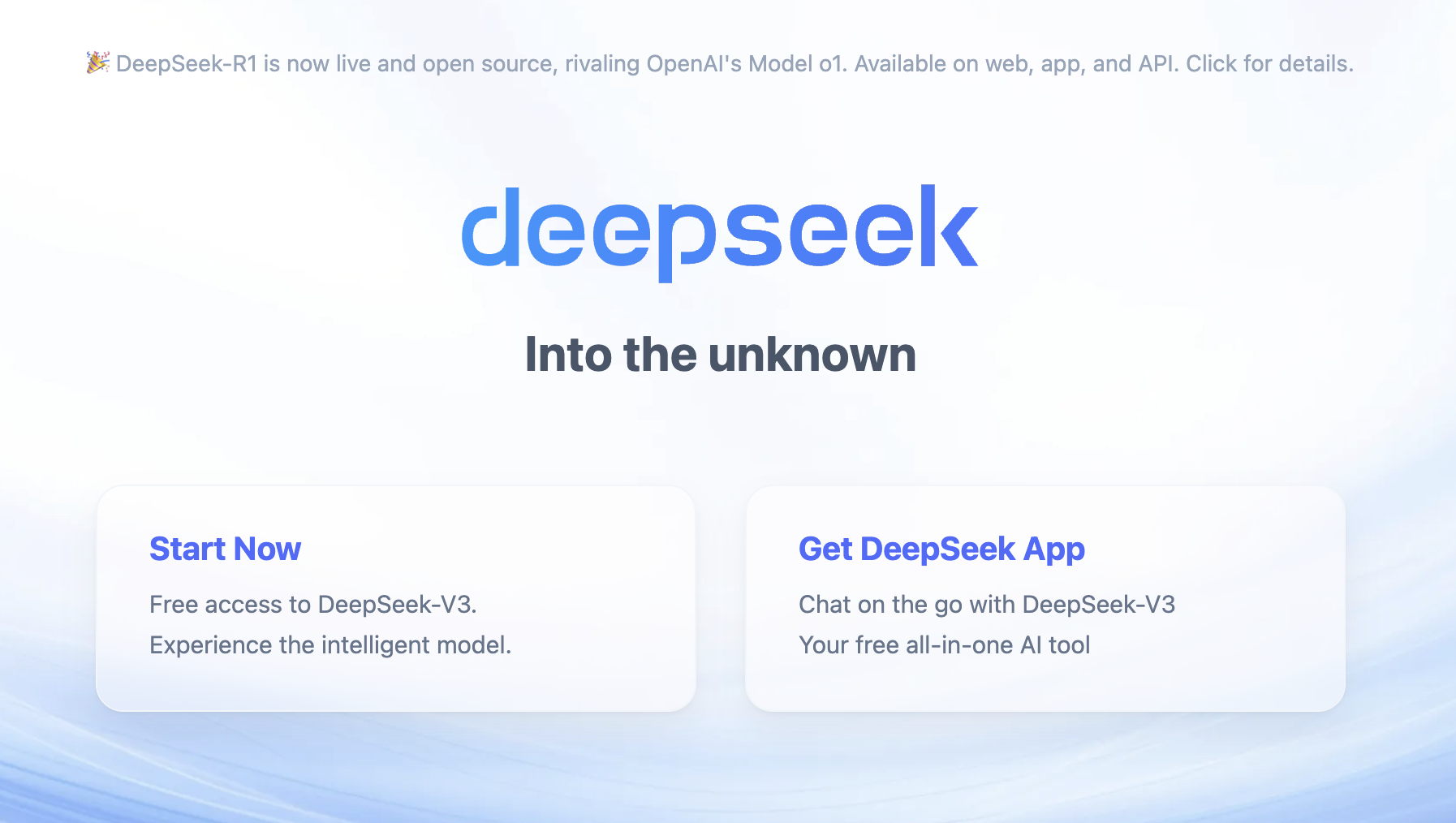
DeepSeek’s official API docs list two V4 variants: deepseek-v4-flash and deepseek-v4-pro. Both support thinking and non-thinking modes, a 1M-token context length, JSON output, tool calls, chat prefix completion, and a maximum output setting of 384K tokens. For agent builders, the combination of long context, tool calls, and cache pricing is the part worth modeling.
The official pricing table lists V4-Flash at $0.0028 per 1M cache-hit input tokens, $0.14 per 1M cache-miss input tokens, and $0.28 per 1M output tokens. V4-Pro is listed at a discounted $0.003625 per 1M cache-hit input tokens, $0.435 per 1M cache-miss input tokens, and $0.87 per 1M output tokens. DeepSeek also notes that the V4-Pro API price will be officially adjusted to one quarter of the original price after the current promotion ends.
That creates a practical SEO and product question: should creator-agent teams treat DeepSeek V4-Pro as a cheap reasoning layer for planning, metadata drafting, prompt expansion, evaluation, and API orchestration?
Where DeepSeek V4-Pro fits creator workflows
DeepSeek V4-Pro is not a video generator or image model by itself. Its Makefun relevance is as a planning and orchestration model around media production. A creator workflow might use a text model to expand campaign briefs, write shot lists, normalize prompts, check brand tone, create localization variants, summarize asset feedback, or decide when a workflow should call a dedicated AI video API.
For agentic production, the model layer is only one part of the system. The actual bill can also include video generation, image generation, speech, captioning, storage, download bandwidth, queue retries, and human review. That is why a low token price should be interpreted as better room for planning and evaluation, not as a replacement for media-generation cost control.
Cost comparison for API and agent builders
| Provider/model | Input cost signal | Output cost signal | Cost drivers to watch |
|---|---|---|---|
| DeepSeek V4-Pro | $0.435 per 1M cache-miss input tokens during the listed 75% rate | $0.87 per 1M output tokens | thinking mode, very long context, cache misses, retries, concurrency limits, post-promotion rate handling |
| DeepSeek V4-Flash | $0.14 per 1M cache-miss input tokens | $0.28 per 1M output tokens | quality threshold, routing between flash and pro, cache-hit assumptions, tool-call loops |
| OpenAI GPT-5.5 | $5 per 1M input tokens on the official API pricing page | $30 per 1M output tokens | reasoning effort, cached input, Batch, Priority/Flex modes, tool calls, generated media, data residency |
| Claude Opus 4.8 | $5 per 1M base input tokens in Anthropic’s pricing docs | $25 per 1M output tokens | cache writes/hits, fast mode, data residency multiplier, long-context prompts, server-side tools |
The surface comparison makes DeepSeek look much cheaper for token-heavy planning. The hidden comparison is more nuanced. If an agent writes extremely long outputs, repeats failed tool calls, or retries media prompts until they pass review, output tokens and surrounding media fees can still dominate. If the workflow uses stable briefs, character sheets, product catalogs, or style guides repeatedly, cache-hit economics can make the planning layer much cheaper.
When DeepSeek V4-Pro is worth testing
DeepSeek V4-Pro is most interesting when the workflow is text-heavy before it becomes media-heavy. Examples include generating structured video briefs, converting customer notes into avatar scripts, scoring prompt variants, drafting scene-by-scene image-to-video instructions, or building a planning layer for an agentic video generator.
It is less clearly valuable when the main bottleneck is final media quality, brand approval, rights review, or generation queue time. In those cases, the cheaper planning model can reduce iteration cost, but it cannot remove the need to validate the final visual output.
Implementation checklist
- Route lightweight prompt expansion and classification to V4-Flash first, then escalate harder planning or review tasks to V4-Pro.
- Measure cache-hit rates separately from total input volume. DeepSeek’s cache-hit price is tiny, but only useful when the same context is reused.
- Cap output length for planning tasks. Cheap input does not help if agents write large drafts that are discarded.
- Log tool-call retries and failed media-generation attempts. Agent loops can erase token savings quickly.
- Compare final workflow cost, not just model cost: video generation, image generation, voice, storage, and review time still matter.
Bottom line
DeepSeek V4-Pro’s pricing update is a meaningful opportunity for creator-agent teams that need more long-context reasoning without paying frontier-model rates for every planning step. The safest adoption pattern is not to replace the whole workflow at once. Use DeepSeek as a routing, planning, evaluation, or script-structuring layer, keep media generation on specialized tools, and track the full cost from prompt to approved asset.
Sources checked for this review include the official DeepSeek models and pricing page and the official Claude API pricing page. OpenAI GPT-5.5 pricing was checked on OpenAI’s official API pricing page, but that page returned a Cloudflare challenge in host-runner link verification, so it is referenced here as a checked pricing source rather than added as a body link.