Pippit AI Video Agent is a useful search signal for creators and marketers who want AI video tools to move beyond one-shot clip generation. The current demand is shifting toward agents that can take a product link, prompt, media file, or document and turn it into a structured video workflow with script, avatar, captions, export formats, and publishing steps.
That makes the topic relevant for Makefun because it sits between agentic video generation, practical image-to-video creation, and production workflows that may also need an AI video API. The SEO opportunity is not just the brand name. It is the broader long-tail intent around AI video agents, link-to-video generation, AI avatar marketing videos, and auto-posting workflows.
What Pippit AI Video Agent Adds
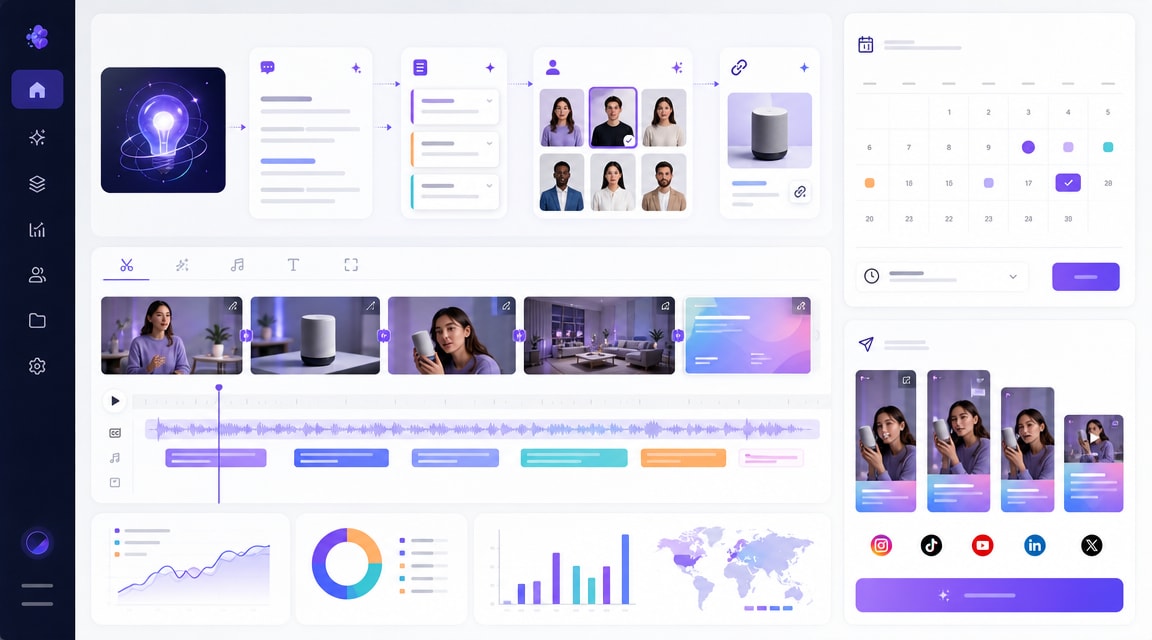
Pippit first positioned Agent Mode as a smart engine for turning an idea into a ready-to-share video. Its current video-agent page extends that framing toward a workflow that can create, schedule, and post videos from ideas or assets. Inputs include prompts, links, media, and documents, which is important because many marketing videos start from a product page, launch brief, or existing asset library rather than a blank prompt.
For Makefun readers, the practical distinction is workflow depth. A normal text-to-video model is judged mostly on visual quality, motion, and prompt following. A video agent is judged on whether it can coordinate planning, scripting, avatar selection, captioning, format choices, review, and distribution without forcing the creator to rebuild the project across several tools.
Why Video Agents Are Becoming a Search Theme
AI video generation has moved quickly, but the last mile still creates friction. Teams need hooks, scripts, product messaging, aspect ratios, subtitles, voice or avatar options, scheduling, and performance review. That is why agentic video products are appearing next to model-first products: users want more of the production chain handled in one place.
- Product-link input: useful when a campaign starts from a store page, landing page, or product catalog.
- Avatar and voice workflows: useful for explainers, tutorials, onboarding clips, and social ads.
- Auto-caption and format control: useful when the same idea needs TikTok, Reels, Shorts, or paid social variants.
- Scheduling and publishing: useful when video creation is tied to a recurring content calendar rather than a one-off export.
This does not replace careful creative review. A video agent can accelerate the draft and assembly process, but teams still need to check claims, brand tone, visual consistency, licensing, and whether each output fits the channel where it will be published.
Competitor and Workflow Context
The competitive pattern is clear: video tools are splitting into model layers and workflow layers. Model layers compete on generation quality. Workflow layers compete on how quickly a creator can move from a brief to a usable, editable, publishable asset. Pippit is leaning into the workflow layer with Agent Mode, product-link generation, avatars, social publishing, and marketing use cases.
Competitor pages around Pippit also frame the category around avatar videos, product videos, campaign workflows, and direct publishing. That reinforces the search fit for a neutral Makefun explainer: users comparing AI video agents need to understand what the agent layer adds before they choose a tool or build a repeatable workflow.
How to Evaluate a Pippit-Style Video Agent
A useful evaluation should focus on handoff reduction. If a creator still needs one tool for product research, another for script drafting, another for avatar video, another for captions, and another for posting, the agent is only solving part of the job. If the workflow can keep the brief, script, visuals, captions, and publishing plan together, it becomes more valuable for small teams and high-volume content calendars.
- Start with the source asset: test a product link, campaign brief, or image instead of only a generic prompt.
- Review before export: check script accuracy, avatar fit, captions, pacing, and platform format.
- Keep Makefun in the visual workflow: use Makefun-style image-to-video and video-generation steps when a campaign needs stronger custom visuals before the final social edit.
- Track repeatability: the best agent workflow should save time across multiple posts, not only produce one impressive demo.
Who Should Watch This Category
Pippit AI Video Agent is most relevant for ecommerce teams, agencies, creators, educators, and small businesses that need frequent short-form videos from existing product or campaign inputs. It is less relevant when a user only needs one cinematic shot or wants deep frame-by-frame control over a single generated clip.
The safest takeaway is to treat video agents as production coordinators. They can reduce setup time, generate variants, and connect publishing steps, while Makefun-style video tools remain useful when the core requirement is stronger custom video generation, image-to-video motion, or API-driven media production.
FAQ
What is Pippit AI Video Agent?
Pippit AI Video Agent is a video workflow that helps turn prompts, links, media, or documents into ready-to-post videos with scripting, visuals, avatars, captions, and publishing options.
Why is it relevant to AI video SEO?
It targets growing search intent around AI video agents, link-to-video creation, avatar marketing videos, social video automation, and agentic production workflows.
Does a video agent replace dedicated AI video generators?
No. It is better understood as a workflow layer that coordinates briefs, scripts, visuals, captions, avatars, export formats, and publishing around video-generation tools.