What are Avatar APIs?
The digital avatar market is booming, with an expected compound annual growth rate of nearly 35% by 2032. Avatar APIs empower businesses to integrate avatar creation functions into their applications, enhancing user engagement and brand identity. From e-commerce to gaming and virtual reality, avatars have become essential tools for personalized interactions and digital experiences.
An Avatar API allows developers to create, customize, and manage avatars programmatically, offering end-users the ability to generate unique digital representations across various platforms. Whether for social networking, customer support, or marketing campaigns, these APIs help brands establish a deeper connection with their audiences.
Best Online Avatar APIs
We’ve compared five top avatar API providers: MakeFun, HeyGen, Tavus, D-ID, and Synthesia, to help you find the best fit for your business needs. Let’s explore their features and see why MakeFun stands out as the ultimate solution.
1. MakeFun: The Best Avatar API for Accessibility and Affordability
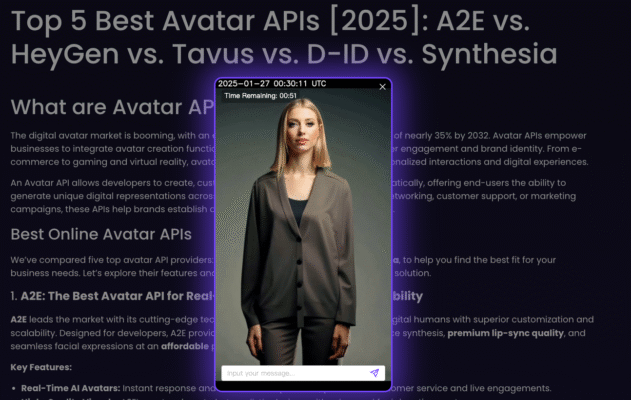
MakeFun leads the market with its cutting-edge technology, offering premium lip-sync quality, real-time interactive digital humans with superior customization and scalability. Designed for developers, MakeFun provides high-quality avatars with natural voice synthesis, premium lip-sync quality, and seamless facial expressions at an affordable price point.
![Top 5 Best Avatar APIs [2025]: MakeFun vs. HeyGen vs. Tavus vs. D-ID vs. Synthesia supporting image - image 11](https://i0.wp.com/makefun.ai/wp-content/uploads/2025/01/image-11.png?resize=2910%2C1310&ssl=1)
Key Features:
- Premium Lip-Sync Quality: Industry-leading accuracy in syncing speech with facial movements for a lifelike experience.
- High-Quality Visuals: MakeFun’s avatars boast photorealistic designs with advanced facial motion capture.
- Multi-Language Support: Provides seamless multilingual voice synthesis and text-to-speech capabilities.
- API Scalability: Designed for high concurrency, ensuring smooth integration into enterprise-level applications.
- Affordable Pay-As-You-Go Pricing: Flexible and cost-effective, making it ideal for businesses of all sizes.
- Real-Time AI Avatars: Instant response and interaction capabilities, perfect for customer service and live engagements.
Why MakeFun is the Best: Compared to HeyGen, Tavus, D-ID, and Synthesia, MakeFun excels in affordability, and unmatched lip-sync quality. While competitors focus primarily on pre-generated videos, MakeFun offers instant, interactive avatars, making it the perfect choice for applications requiring dynamic user experiences, such as virtual assistants and customer support.
2. HeyGen: Best for Marketing Automation Avatar API
HeyGen focuses on AI-driven video avatars tailored for marketing and content creation. It enables businesses to generate personalized video content quickly and at scale.
![Top 5 Best Avatar APIs [2025]: MakeFun vs. HeyGen vs. Tavus vs. D-ID vs. Synthesia supporting image - image 13](https://i0.wp.com/a2e-ai.us.wpworld-host.com/wp-content/uploads/2025/01/image-13.png?resize=1450%2C914&ssl=1)
Key Features:
- Pre-Recorded Video Avatars: Ideal for marketing campaigns and automated presentations.
- Customization Options: Supports branding elements such as logos, colors, and personalized scripts.
- API-Driven Automation: Integrates with CRM and marketing platforms for automated video generation.
Limitations: HeyGen’s primary drawback is its heavy reliance on pre-recorded content. Most users struggle to meet HeyGen’s strict video guidelines, resulting in output that falls short of the high-quality demos showcased by HeyGen. Additionally, HeyGen’s pricing is considered expensive, with numerous clients reporting unexpected hidden fees that can significantly increase overall costs.
3. Tavus: Best for Personalized Video Generation Avatar API
Tavus specializes in personalized video creation through AI, allowing users to generate thousands of unique videos from a single template.
![Top 5 Best Avatar APIs [2025]: MakeFun vs. HeyGen vs. Tavus vs. D-ID vs. Synthesia supporting image - image 14](https://i0.wp.com/a2e-ai.us.wpworld-host.com/wp-content/uploads/2025/01/image-14.png?resize=1428%2C892&ssl=1)
Key Features:
- Text-to-Video: Users can create videos by inputting a script from the avatar API.
- Lip Syncing: Offers high-quality lip-syncing for realistic avatars.
- Automated Campaigns: Suitable for large-scale video marketing efforts.
Limitations: While Tavus provides high-quality real-time interactions, it falls short in scalability, and its price is very high, making it less suitable for businesses with large-scale requirements.
4. D-ID: Best for AI-Powered Talking Avatar API
D-ID is renowned for its advanced AI-powered talking avatars, offering lifelike facial animations for a range of applications, including customer engagement and training.
![Top 5 Best Avatar APIs [2025]: MakeFun vs. HeyGen vs. Tavus vs. D-ID vs. Synthesia supporting image - image 15](https://i0.wp.com/a2e-ai.us.wpworld-host.com/wp-content/uploads/2025/01/image-15.png?resize=1450%2C798&ssl=1)
Key Features:
- Text-to-Video Conversion: Create speaking avatars from text or audio input.
- Seamless Lip-Syncing: Accurate lip movements synchronized with voice.
- Cloud-Based API: Easily integrates into various platforms.
Limitations: D-ID’s focus on talking avatars means limited interactivity compared to MakeFun’s real-time capabilities.
5. Synthesia: Best Avatar API for Corporate Training Videos
Synthesia is widely used for creating AI-generated training and explainer videos, offering a library of avatars suitable for corporate use.
![Top 5 Best Avatar APIs [2025]: MakeFun vs. HeyGen vs. Tavus vs. D-ID vs. Synthesia supporting image - image 16](https://i0.wp.com/a2e-ai.us.wpworld-host.com/wp-content/uploads/2025/01/image-16.png?resize=1338%2C716&ssl=1)
Key Features:
- Professional Video Templates: Ideal for e-learning and corporate communication.
- Multilingual Support: Over 50 languages supported by the Avatar API.
- Custom Branding: Add logos and company colors.
Limitations: Synthesia is best treated as a generated training-video and explainer-video workflow, not a real-time interactive avatar API replacement. Custom avatar, API-minute, credit, add-on, dubbing, and interactive-delivery limits should be checked against the current Synthesia plan before using it for large-scale automation.
Synthesia API pricing and workflow planning update, refreshed July 2026
Synthesia’s current public pricing page lists Basic, Starter, Creator, and Enterprise plans with shared credits, monthly video-minute planning limits, personal avatar allowances, and paid add-ons. For API planning, treat Creator as the first self-serve plan that includes API access, while Enterprise remains the path for custom credit pools, custom minutes, SCORM export, and higher-volume governance. Refresh the official Synthesia pricing, API introduction, billing usage, personal avatar, interactivity, and API rate-limit pages before quoting exact limits in a procurement worksheet.
| Planning row | What to verify before choosing Synthesia |
|---|---|
| Credits and minutes | Basic and Starter are useful for light testing; Creator and Enterprise need a same-scenario check for monthly minutes, annual API-minute assumptions, and extra usage. |
| API automation | Separate template-driven video generation from real-time avatar interaction; API rate limits differ for read and write operations. |
| Avatar and media add-ons | Budget for personal avatar allowances, Studio Express avatar add-ons, generated b-roll/action credits, Veo/Sora clips, dubbing, translation, and failed generations. |
| Interactive delivery | Do not plan around downloadable interactive videos; Synthesia documents player, share page, iframe, and SCORM delivery, with SCORM positioned for Enterprise workflows. |
| Consent and likeness review | Personal avatar creation requires consent-oriented capture/review steps, so timeline and governance matter for customer-facing or employee likeness workflows. |
More About Avatar API Generators
Choosing the right avatar API depends on your business needs. If you’re looking for real-time interaction, cost-effective scalability, and high customization, MakeFun stands out as the best option. HeyGen, Tavus, D-ID, and Synthesia are strong contenders but are better suited for automated marketing and video campaigns.
Use the Best Avatar API
When selecting the best avatar API, consider factors such as:
- Real-Time vs. Pre-Generated: If instant user engagement is crucial, MakeFun is the superior choice.
- Customization Needs: Ensure the API provides the level of personalization required.
- Scalability: MakeFun offers unmatched performance in handling large-scale deployments with ease.
In conclusion, MakeFun emerges as the best avatar API for businesses seeking real-time, scalable, and cost-effective digital human solutions. Its advanced technology, affordability, and seamless integration make it the ultimate choice for developers looking to enhance user engagement.
Ready to revolutionize your platform with MakeFun? Get started today and experience the best in avatar technology!
2026 Tavus CVI cost planner update
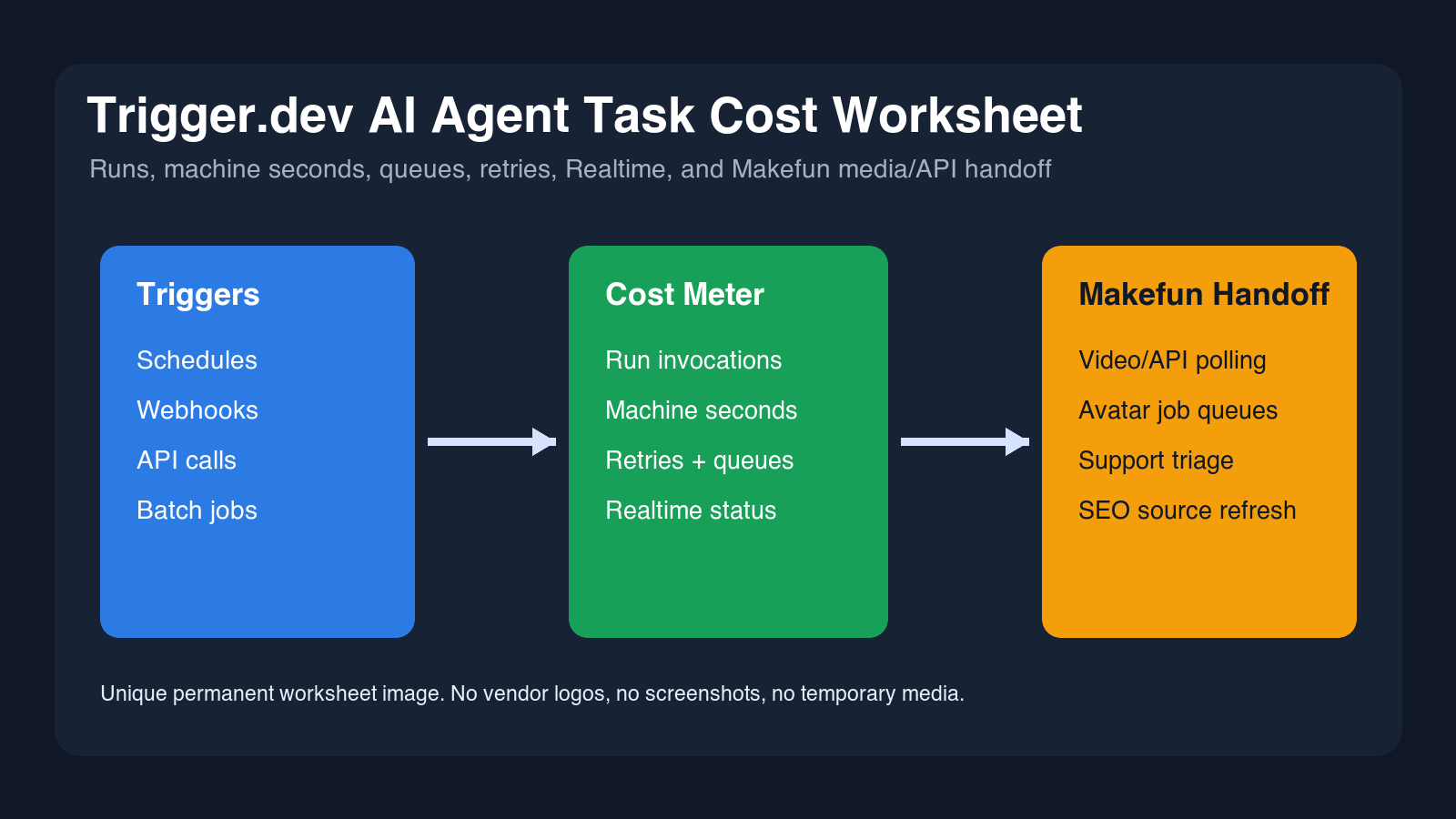
Source refresh: July 2026. For real-time avatar agents, Tavus CVI planning should start with included AI conversational video minutes, pay-as-you-go overage exposure, replica and persona setup, concurrency needs, recording or storage requirements, and whether white-label API access is required. Treat Enterprise rows as quote-required instead of forcing an unsupported exact total.
| Planning scenario | Tavus CVI check | D-ID API comparison check | Budget note |
|---|---|---|---|
| 100 monthly conversation minutes | Confirm whether Developer Basic or Starter included minutes cover the pilot before adding custom replica work. | Compare API credits, streaming-video minutes, watermark state, and commercial license requirements. | Track setup, consent, retries, and QA time separately from platform fees. |
| 500 monthly conversation minutes | Model overage minutes, concurrency, timeout behavior, recordings, and support tier before scaling a support or sales agent. | Check Launch or Scale API minute allowances, embedded-agent needs, storage, and watermark removal. | Use explicit assumptions for average call length and abandoned sessions. |
| 1,000+ monthly conversations | Move quote-required items into an Enterprise row for custom concurrency, white-labeling, SLA, compliance, and dedicated support. | Use custom-minute and enterprise rows only where D-ID publishes or confirms the term. | Do not publish exact enterprise totals without current vendor evidence. |
For Makefun buyers, this means Tavus is strongest when the persona, replica, and real-time CVI pipeline are the core workflow, while D-ID deserves a same-use check when API credits, streaming minutes, watermark/license terms, embedded agents, or S3 storage are the main constraint. Keep avatar API spend separate from downstream video generation, WordPress media, moderation, and human review budgets.