Anthropic’s acquisition of Stainless is not just a developer-tools headline. It is a signal that frontier AI competition is moving from model answers toward agent workflows that can reliably call APIs, read data, trigger tools, and continue work across production systems.
For Makefun-style creator and media teams, the practical question is simple: if an AI agent is planning a video, preparing prompts, generating assets, checking usage limits, or coordinating an avatar workflow, how safely can it connect to the APIs around that work? Stainless sits directly in that layer.
What Anthropic bought
Anthropic announced the Stainless acquisition on May 18, 2026. Anthropic says Stainless has generated every official Anthropic SDK since the early Claude API days, and that hundreds of companies use Stainless to generate SDKs, CLIs, and MCP servers from API specifications across languages such as TypeScript, Python, Go, and Java.
That matters because most agent failures are not caused by weak writing. They happen when the model has poor tool descriptions, brittle parameters, missing SDK behavior, unclear authentication rules, or connector code that drifts behind the real API. Stainless gives Anthropic more control over the connective tissue between Claude, MCP servers, and production APIs.
Why this matters for creator and video workflows
AI video and avatar production increasingly depends on a chain of specialized tools: brief generation, prompt rewriting, image creation, video generation, lip sync, voice, storage, moderation, billing, and publishing. A model can plan that work, but an agent has to call each service correctly.
That is why the Stainless deal is relevant to workflows around agentic video generators, AI video APIs, and Claude-based planning covered in Makefun’s Claude Agent SDK pricing change article. The value is not that Stainless generates video. The value is that better SDKs and MCP servers can make agent-orchestrated media pipelines less fragile.
How teams should evaluate the opportunity
The immediate SEO and product takeaway is to separate model quality from agent integration quality. A strong model with weak tool access can still fail at a production job. A slightly less capable model with clean APIs, stable SDKs, good error handling, and observable tool calls may be easier to use in repeatable content operations.
For creator workflows, evaluate the following before committing to an agent stack:
- Does the provider maintain official SDKs for the language your backend actually uses?
- Can the API schema generate useful MCP tools without hand-written glue code?
- Are long-running media jobs, retries, polling, and temporary result URLs represented clearly?
- Can the agent distinguish source upload URLs from permanent publishing URLs?
- Does the billing model make repeated tool loops and context reuse affordable?
Cost and pricing comparison
Because this topic affects Claude API and agent workflows, cost planning should include both token pricing and tool-layer overhead. Anthropic’s Claude API pricing page lists Claude Opus 4.8 at $5 per million input tokens and $25 per million output tokens, Claude Sonnet 4.6 at $3 input and $15 output, and Claude Haiku 4.5 at $1 input and $5 output. The same page also calls out prompt-cache writes, cache hits, a 1.1x US-only inference multiplier, and premium fast mode for Opus.
As a same-use competitor reference, OpenAI’s public API pricing page lists GPT-5.5 at $5 per million input tokens, $0.50 per million cached input tokens, and $30 per million output tokens. OpenAI also exposes service-tier choices such as Batch API, priority processing, and flex processing, plus tool costs such as web search calls and code containers.
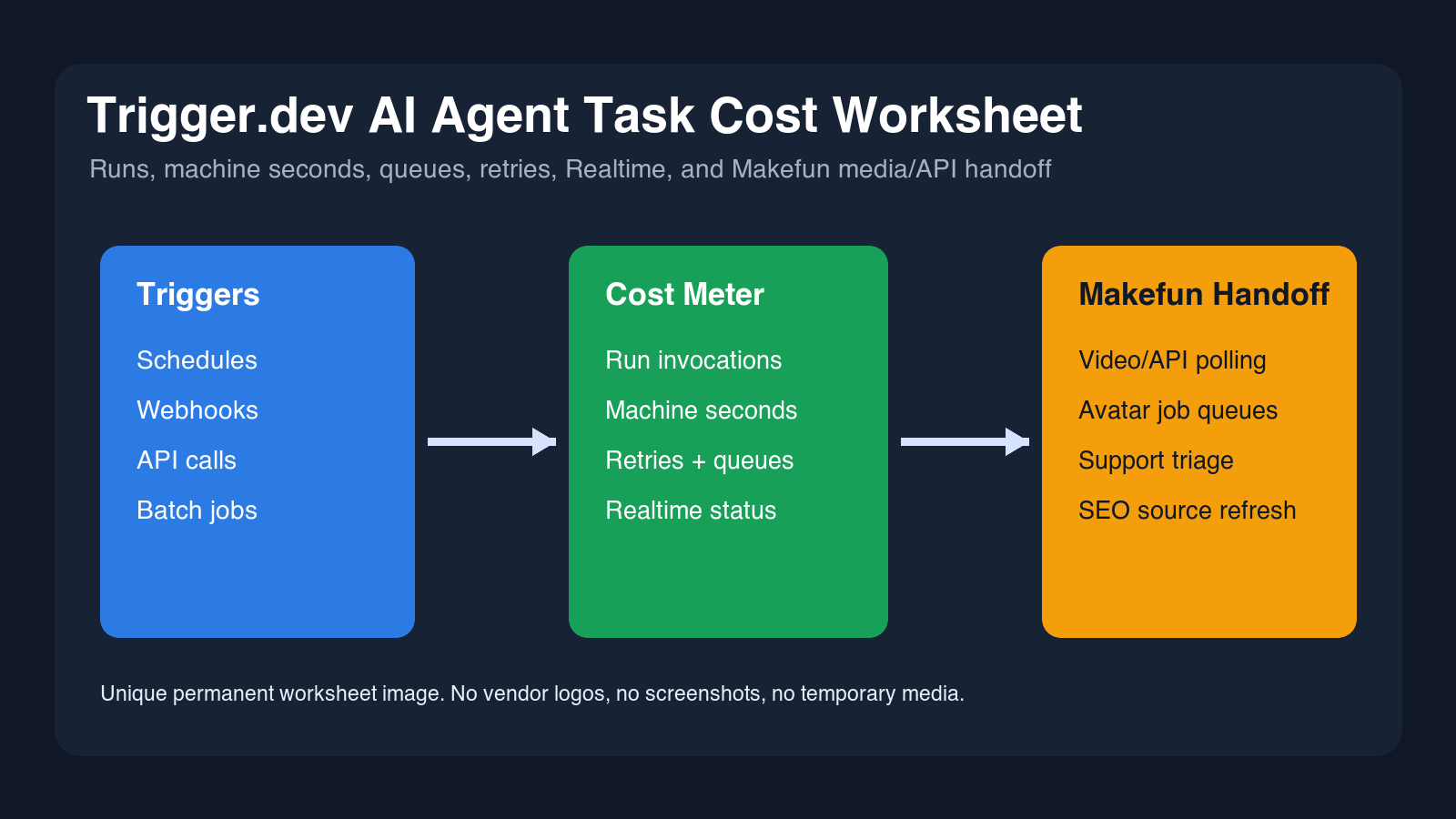
The hidden cost drivers are often more important than the headline token rate. Agent workflows can multiply costs through long system prompts, repeated tool retries, large API responses, image or video generation fees, polling loops, cache write patterns, data-residency uplifts, fast or priority modes, batch discounts, and subscription limits. For a media team, the cheapest plan on paper may not be cheapest if it causes more failed generations or requires more manual repair.
Makefun planning takeaways
For Makefun-adjacent production, the Stainless acquisition supports a broader trend: creator platforms should prepare for agents that call APIs directly instead of only generating prompts for humans. The strongest near-term use cases are not fully autonomous video directors. They are controlled assistants that prepare briefs, route work to the right model, monitor temporary files, estimate cost before generation, and hand off only permanent assets for publishing.
The practical next step is to treat agent readiness as a checklist: clean API docs, stable SDKs, explicit media lifetimes, observable job states, and pricing controls. That is where the Anthropic-Stainless combination could matter most, and it is also where creator tools can differentiate from simple chat wrappers.
FAQ
Is Stainless an AI video generator?
No. Stainless is developer infrastructure for generating SDKs, CLIs, and MCP servers from API specifications. Its relevance to AI video is that better connectors can help agents operate media-generation workflows more reliably.
Does the acquisition change Claude pricing?
Anthropic did not announce a pricing change in the Stainless acquisition post. Teams should still model Claude costs from the official Claude pricing page and include cache, fast mode, regional routing, and repeated tool calls.
Should creators use Claude agents or OpenAI agents for media workflows?
There is no universal winner. Claude may be attractive where MCP and structured agent workflows matter; OpenAI may be attractive where a team already uses GPT models, OpenAI tools, or service tiers. Compare end-to-end job reliability and total workflow cost, not only the base token price.