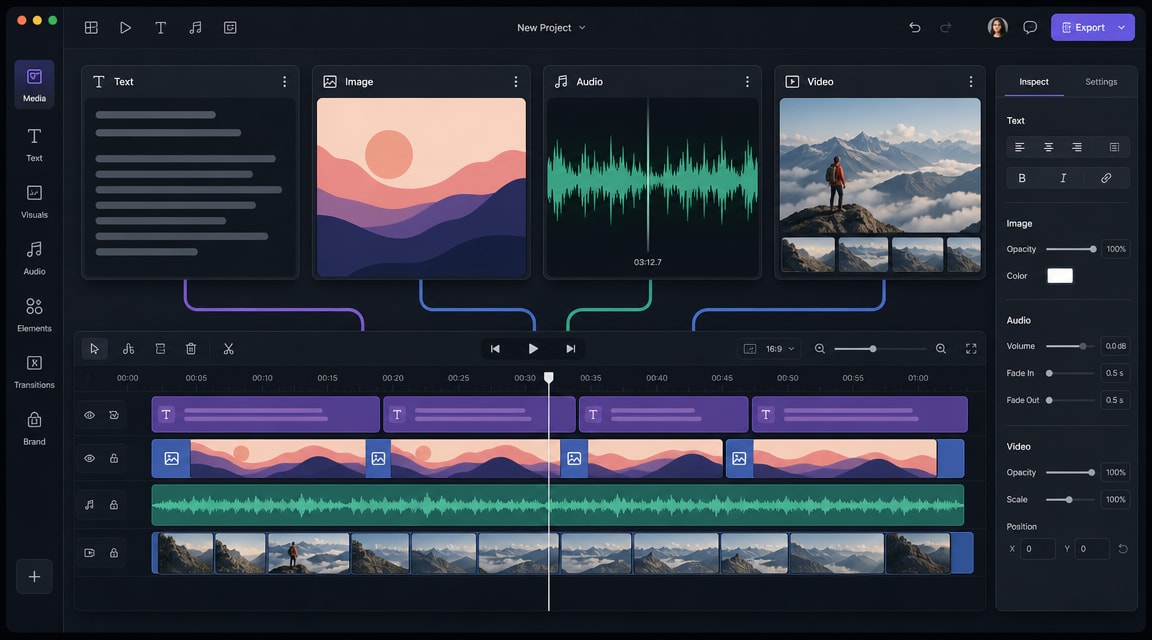
Gemini Omni AI video generator interest is rising because Google is positioning Gemini Omni around video-first multimodal creation: creators can start from text, images, audio, or existing video and then refine a scene through conversational edits.
What Gemini Omni changes for AI video generation
Google’s Gemini Omni page describes a video-first model that can use many input types and keep edits continuous across an interactive creation session. For SEO and creator planning, that makes Gemini Omni part of the same search conversation as AI video generation with audio, image-to-video workflows, and all-in-one AI tools.
The practical shift is not only higher quality output. It is workflow depth: creators increasingly expect a model to understand references, preserve scene context, adjust motion or style, and support iterative edits without restarting from scratch.
Why this matters for all-in-one creator workflows
All-in-one AI creation pages now need to explain how text, image, audio, and video tools connect. A creator may begin with a product image, generate a short video concept, add audio direction, and then compare model options before exporting campaign assets.
That is why Makefun should cover Gemini Omni as an informational model topic even before making any unsupported product claim. The page can help users understand the market while linking them to available Makefun workflows for current AI video and AI image generation.
How creators should compare Gemini Omni with Veo, Kling, Seedance, and Wan
Use Gemini Omni as a multimodal editing and video-first research term. Use Veo 3.1 when the search intent is Google video generation and cinematic model output. Use Kling 3.0 native 4K when resolution, camera control, or production-ready video details matter.
For fast model comparison, creators should also review Seedance 2.0 AI videos, Wan 2.6 AI video generation, and image-side workflows such as Nano Banana Pro AI image generation.
Makefun workflow checklist
- Start with the asset you already have: prompt, product image, reference frame, voice direction, or short clip.
- Choose the model family by goal: cinematic video, image-to-video, native audio, native 4K, or image editing.
- Use an all-in-one AI workflow when the project needs both image and video assets.
- Keep model comparisons neutral and test the same prompt across tools when quality, motion, or timing matters.
For a broader market view, read Makefun’s guide to AI video generator trends in 2026.
FAQ
What is Gemini Omni?
Gemini Omni is Google’s video-first multimodal model direction for creating and editing video from different input types, including text, images, audio, and video context.
Is Gemini Omni the same as Veo?
No. Veo is Google’s video generation model family, while Gemini Omni is positioned around multimodal, conversational video creation and editing workflows.
Can Gemini Omni use images, audio, text, and video together?
Google describes Gemini Omni around multimodal creation from any input, so the search intent includes creators who want connected text, image, audio, and video workflows.
How should creators compare Gemini Omni, Veo, Kling, Seedance, and Wan?
Compare by the job: multimodal editing, cinematic generation, image-to-video control, native audio, resolution, speed, and whether the tool fits an all-in-one production workflow.