The Sonilo AI video-to-music generator is a timely signal for creators who already use AI video tools but still lose time finding music that fits the final edit. Sonilo’s launch frames the workflow around analyzing a video first, then generating soundtrack variations that match the footage instead of asking the creator to start with genre, mood, or BPM prompts.
That matters because AI video workflows are getting faster while soundtrack selection often remains manual. A creator can generate or edit clips in a tool like Makefun, but the project still needs pacing, transitions, and audio that feel aligned. Sonilo is trying to make that scoring step more video-native.
What Sonilo announced
Sonilo announced on PRNewswire that its platform is open to creators and can generate production-ready soundtracks directly from video. The public Sonilo site describes the product as AI video-to-music generation, and its API page points to product integrations where video platforms can add music generation directly into the workflow.
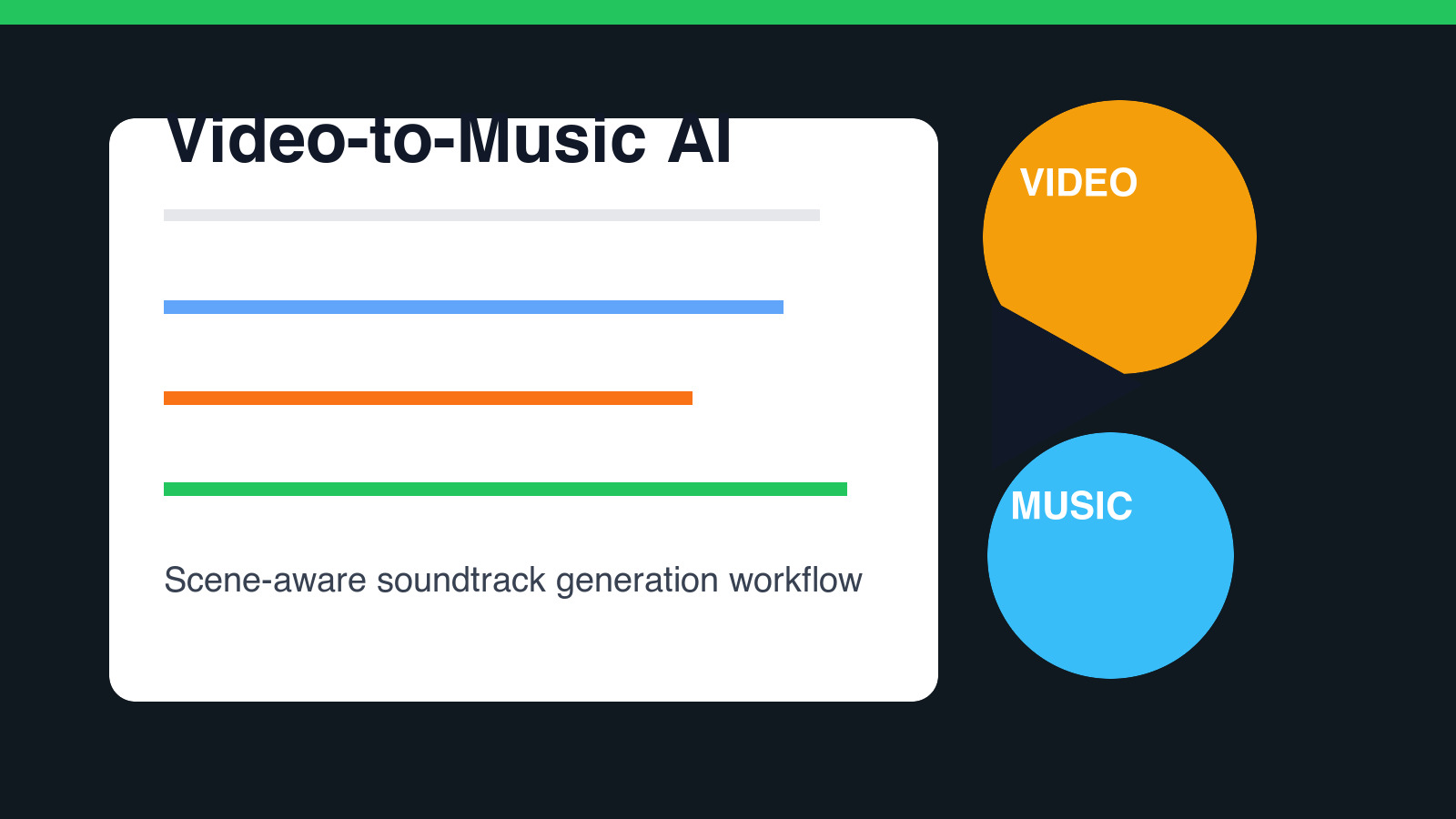
The useful search angle is not just AI music generation. It is video-first music generation: upload or pass in footage, let the system read the visual rhythm, then review multiple soundtrack options that can fit the scene. That makes the topic a natural extension of Makefun’s existing video-to-audio AI generator and AI music video generator from audio coverage.
Why this is relevant for Makefun creators
Most AI video projects move through several stages: concept, image or video generation, edit review, audio, captions, and export. Makefun already helps creators start with image-to-video and AI video workflows. A video-to-music layer fits after the first visual pass, when the creator can judge pacing and decide whether the final clip needs cinematic, upbeat, calm, or product-demo style sound.
- For social clips: generate music after the visual rhythm is clear, then cut or regenerate clips around the strongest beat.
- For product videos: use soundtrack variations to test whether the clip feels like a launch teaser, tutorial, or explainer.
- For AI avatar and narrative clips: keep music secondary to voice, captions, and scene clarity.
- For reusable production systems: API-style video-to-music generation can reduce repeated handoff work between video tools and audio libraries.
This is also where neutral caution helps. Soundtrack generation can speed up ideation, but teams should still review licensing, brand fit, and distribution requirements before using any generated track commercially.
How it compares with broader AI music tools
The broader market is moving music generation closer to video production. Artlist, for example, announced an AI music expansion for video production earlier in 2026. Prompt-led music tools such as Suno-style products remain useful for songs and sketches, but video-first scoring is a different search intent: the user already has footage and needs music that responds to the edit.
For Makefun’s audience, the strongest use case is pairing video generation with post-generation review. Create the clip, review motion and timing, then generate music from the final or near-final video. That keeps the audio decision attached to the actual scene rather than a guess made before the video exists.
A practical workflow
- Create the source clip with an AI video generator or an image-to-video workflow.
- Trim obvious failed frames, long pauses, or weak transitions before scoring.
- Use a video-to-music tool to generate several soundtrack directions from the clip.
- Pick the track that supports the edit without overpowering voice, captions, or product details.
- Export a short test version, then re-check timing on mobile and desktop playback.
The keyword opportunity is clear: creators are no longer only searching for AI video generators or AI music generators separately. They are searching for workflow glue, especially tools that can make a finished AI video feel paced, complete, and ready to publish.
FAQ
What is the Sonilo AI video-to-music generator?
It is a video-first music generation workflow that uses uploaded footage as the starting point for soundtrack creation.
Is this the same as an AI music generator?
Not exactly. General AI music tools often begin with a text prompt. Sonilo’s positioning starts with the video, then generates music that is intended to match the visual edit.
How should AI video creators use this kind of tool?
Use it after the clip is visually close to finished. That gives the soundtrack generator a clearer signal for pacing, mood, and scene changes.