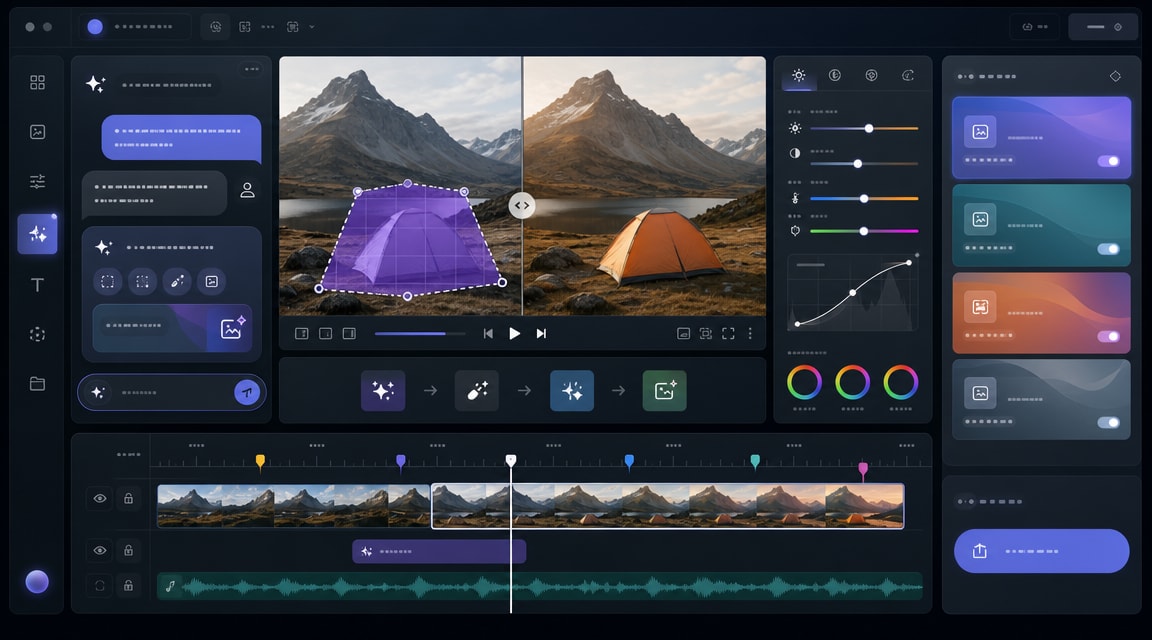
Buzzy AI Video Photoshop is a useful keyword to watch because the AI video market is moving from prompt-only generation toward conversational editing: upload a clip, describe a change, and refine the result without rebuilding the whole video from scratch.
Why Buzzy Matters For AI Video Teams
Buzzy’s April 2026 launch positions the product as a chat-driven video editor for fixing and refining content. That framing lines up with a wider search pattern around agentic video editing, where creators want to replace products, remove background issues, adjust lighting, or repair a small mistake after a clip is already close to final.
Best-Fit Workflow
The clearest use case is post-generation cleanup. A creator can first plan a sequence, generate or assemble rough clips, then use conversational editing to make local fixes. For Makefun readers, that means Buzzy belongs in the same workflow map as Runway Aleph AI video editing, Mobbi vibe editing, and broader agentic video generator patterns.
What To Evaluate Before Using It
- Can it preserve the untouched parts of a video after a local change?
- Does it keep temporal consistency across frames after object, background, or lighting edits?
- Can teams export results cleanly into a production pipeline instead of staying inside a single app?
- Does it support the formats needed for ads, short-form social clips, product videos, and creator review loops?
Where Makefun Fits
Makefun can support the upstream and downstream parts of this workflow: idea planning, image-to-video iteration, avatar or product-video generation, and API-oriented production. If a clip needs to be created before editing, start with Makefun image-to-video workflows. If the priority is automation across many assets, compare the editing step with Makefun’s video API and agentic workflow guides.
FAQ
Is Buzzy only for generating new videos?
No. The market signal around Buzzy is specifically about conversational editing: refining or repairing existing footage with natural-language instructions.
Why call it AI Video Photoshop?
The phrase points to localized control: changing part of a video while trying to preserve the surrounding scene, timing, and visual context.
Who should track this category?
Short-form creators, product marketers, ad teams, and AI video API builders should track it because small post-generation fixes can determine whether a generated clip is usable.