Runway Aleph 2.0 AI video editor is the clearest new search opportunity this hour because it shifts the AI video conversation from only generating fresh clips to editing existing footage with prompt-guided, frame-led changes.
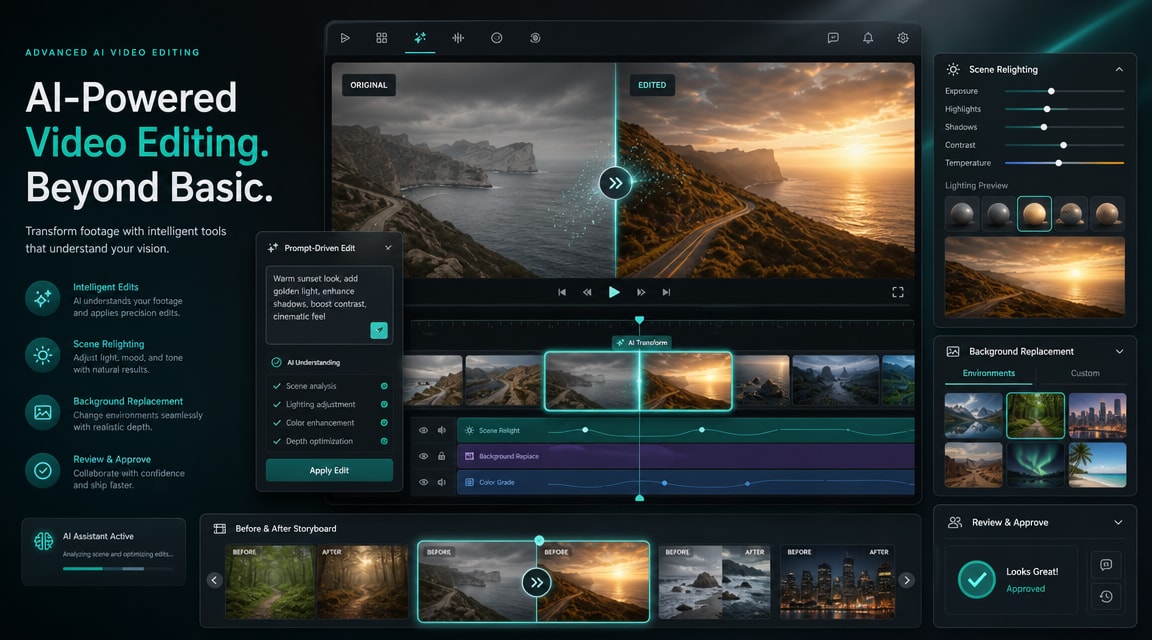
Runway announced Aleph 2.0 and Edit Studio on May 21, 2026, positioning the update as a way to edit a video from a selected frame, preview the frame-level change, and then carry that change across the rest of the clip. That matters for creators who already use text-to-video or image-to-video models, because the post-production step is often where otherwise useful clips break down: a product shot needs a cleaner background, a scene needs different weather, or a generated take needs consistent color and lighting before it can ship.
Why Aleph 2.0 Is Different From Another AI Video Generator
Most AI video generator searches still start with a blank prompt or a source image. Aleph 2.0 targets a different intent: how do I fix or reshape a clip I already have? Runway describes the workflow around selecting a frame, making the desired change, and letting Aleph apply that edit through the video. For SEO intent, that makes this topic closer to an AI video editor, video-to-video model, and creative review workflow than a pure text-to-video launch.
The Runway changelog also reinforces the same product direction: Edit Studio is being presented as a production interface for turning a specific visual edit into a consistent clip-level change. That gives Makefun a useful long-tail angle: creators comparing Runway Gen-4.5, Gemini Omni, PixVerse V6, and image-to-video workflows need guidance on where prompt-based editing fits after generation.
Where It Fits In A Makefun Workflow
A practical Makefun workflow can treat Aleph-style editing as the cleanup layer after generation. Start by generating source clips with the model that best fits the brief: Runway or PixVerse for cinematic motion, Gemini Omni for multimodal input experiments, or an image-to-video path when a product image or key visual needs to stay central. Then use an AI video editor workflow to adjust the shot without restarting the entire generation process.
This is especially useful for campaign assets where the first generation is close but not finished. A creator might keep the same camera move while changing background color, swap a scene mood from daylight to night, relight a product surface, or create several visual variants for ads. For music, trailer, and short-form social edits, the same editing-first mindset pairs naturally with Makefun’s AI music video generator from audio coverage because the final video often needs mood and scene consistency after the base clip is built.
What To Check Before Relying On Prompt-Based Video Editing
Prompt-based editing is powerful, but teams should still review the output like normal production footage. Check whether the edit preserves subject identity, camera movement, timing, product shape, text, logos, and facial detail. Avoid treating any model’s demo as a guarantee for regulated, brand-sensitive, or high-volume production work. For SEO and editorial accuracy, Makefun should frame Aleph 2.0 as a current video editing workflow signal, not as proof that every video edit is solved.
External video-edit model rankings also show why this deserves coverage. The current video-editing benchmark conversation includes Runway’s Aleph family alongside other dedicated video edit models, which means users are searching beyond generic video generation and into editing quality, shot control, and production reliability.
Runway Aleph 2.0 Workflow Checklist
- Use a clear source clip with stable subject, framing, and motion.
- Choose one high-impact edit first: background, lighting, outfit, object, or mood.
- Preview the selected frame before spending credits on the full clip.
- Compare the edited video against the original for identity, timing, and camera continuity.
- Keep a fallback generation path if the edit changes too much of the scene.
FAQ
What is Runway Aleph 2.0?
Runway Aleph 2.0 is Runway’s upgraded AI video editing model, launched with Edit Studio, for making prompt-guided changes to existing video clips.
Is Aleph 2.0 the same as Runway Gen-4.5?
No. Gen-4.5 is covered as an AI video generation workflow, while Aleph 2.0 is framed around editing and transforming footage after a clip already exists.
When should creators use an AI video editor instead of regenerating a clip?
Use an AI video editor when the core motion and composition are already useful but the scene needs a targeted change such as lighting, background, mood, or visual style.
How should Makefun users compare Aleph 2.0 with other AI video tools?
Compare it by workflow fit. Use generation models for new shots, image-to-video for animating stills, and editing models when the main task is preserving a clip while changing specific visual details.