Parallel cost planning works best as a workflow worksheet, not a generic web-search API comparison. Separate Search, Extract, Chat, Task processor runs, FindAll matches, Entity Search, Monitor executions, webhook handling, human QA, and Makefun publication handoff before you estimate monthly spend.

Parallel pricing snapshot for research workflows
Source refresh date: June 5, 2026. The official Parallel pricing, rate-limit, getting-started, Task, FindAll, and Monitor pages were reachable during Publisher checks. Treat every number below as a worksheet input that should be refreshed before reusing the model in a new month.
| Line item | Worksheet input | Planning note |
|---|---|---|
| Search | $5 per 1,000 requests; additional page results/excerpts at $1 per 1,000 | Use for routine source discovery before escalating to structured research. |
| Extract | $1 per 1,000 URLs | Use after Search or direct source checks identify pages worth reading. |
| Task processors | Lite $5 per 1,000 runs through ultra8x $2,400 per 1,000 runs | Model successful Task runs by processor tier; keep row count separate from output fields. |
| FindAll | Preview, base, core, and pro generator rows with fixed plus per-match pricing | Add enrichment tier, match validation, dedupe, and QA rows. |
| Entity Search | $5 per 1,000 requests with default result allowance | Use as its own lookup line rather than hiding it inside FindAll or Task costs. |
| Monitor | Lite and base processor executions per 1,000 runs | Model cadence, active monitors, webhooks, follow-up API calls, and editor triage separately. |
Cost formula
Use separate rows for request units, Task processor runs, FindAll fixed and match costs, Monitor executions, webhook handling, downstream LLM work, and editor review. That keeps Parallel API spend distinct from Makefun-side publication cost.
monthly_cost = search_requests + extract_urls + chat_requests + successful_task_runs + findall_generator_cost + findall_match_cost + enrichment_runs + entity_search_requests + monitor_executions + webhook_handling + human_QA + downstream_update_workWorksheet 1: Daily AI pricing source-refresh worksheet
A Makefun SEO workflow checks official pricing pages for AI APIs each day, uses lighter Search/Extract request rows for routine refreshes, and escalates ambiguous provider changes to Task runs.
monthly_cost = search_requests * 0.005 + additional_search_results * 0.001 + extract_urls * 0.001 + successful_task_runs_by_processor + monitor_events_review_cost + downstream_llm_tokens + editor_fact_check_minutesSame-unit inputs
- routine search line: current Parallel docs list Search at $5 per 1,000 requests with 10 default results and $1 per 1,000 additional page results/excerpts
- extract line: current docs list Extract at $1 per 1,000 URLs for page-content retrieval after Search narrows the source set
- task escalation line: current docs list Task processors from lite $5/1,000 runs through ultra8x $2,400/1,000 runs, with fast processors priced the same as standard counterparts
- row-versus-field rule: current docs say Task pricing is per Task Run row, not per output field, so one well-scoped row can return multiple fields without multiplying Parallel API spend
- failed-run branch: current docs say only successfully completed Task runs are billed; still track retries, polling, and editorial delay outside Parallel billing
- rate-limit branch: current rate-limit docs list create-request quotas separately from GET result/status polling; Publisher should verify quota language before publication
Comparison rows
- Tavily, Firecrawl, Brave Search, Exa, Browserbeam, and direct-provider scripts should be compared as same workflow rows, not as universal cheaper/faster claims
- Use direct official API checks when a provider has a stable pricing page and Makefun only needs deterministic fetch plus human review
- Use Task only for ambiguous source changes that require structured multi-source reasoning and citations
The calculator should show when Search/Extract/direct checks are enough and when a billed Task row is worth the extra research cost.
Worksheet 2: FindAll provider-list and enrichment worksheet
A creator-ops or SEO team builds a list of AI video, speech, search, or agent vendors and enriches matched entities before deciding which Makefun comparisons deserve updates.
findall_cost = generator_fixed_cost + cost_per_match * matched_candidates + matched_candidates * enrichment_processor_cost_per_run + entity_search_requests * 0.005 + additional_entity_results * 0.00005 + human_QA_minutesSame-unit inputs
- FindAll preview generator line: current docs list $0.10 fixed cost and $0 per match for testing queries around 10 candidates
- FindAll base generator line: current docs list $0.25 fixed cost plus $0.03 per match for broad common queries
- FindAll core generator line: current docs list $2.00 fixed cost plus $0.15 per match for specific moderate-match queries
- FindAll pro generator line: current docs list $10.00 fixed cost plus $1.00 per match for rare or hard-to-find matches
- enrichment branch: docs state enrichments add a per-match cost based on the chosen Task API processor, so enrichment tier must be explicit in every scenario
- Entity Search branch: current docs list Entity Search at $5 per 1,000 requests with 100 default results and $0.05 per 1,000 additional results
Comparison rows
- Compare against Exa Websets, Apify actors, SerpAPI/DataForSEO search-result collection, Linkup/Jina retrieval, and Makefun-owned spreadsheet research only for the same provider-list goal
- Do not compare FindAll per-match economics to raw search APIs without adding match validation, enrichment, dedupe, and human QA rows
- Keep outreach, CRM upload, legal/source review, and WordPress publishing outside the Parallel API line item
FindAll cost depends on generator choice, match count, enrichment tier, and QA, so a low fixed price can still become expensive if every match receives high-tier enrichment.
Worksheet 3: Competitor pricing Monitor worksheet
A Makefun update workflow tracks competitor pricing, provider launches, docs changelogs, or model/API availability and turns verified Monitor events into update-ready briefs.
monthly_monitor_cost = active_monitors * executions_per_month * monitor_processor_cpm / 1000 + triggered_extract_urls * 0.001 + triggered_task_runs_by_processor + webhook_retry_handling + editor_review_minutes + update_publication_handoffSame-unit inputs
- monitor lite line: current docs list Monitor lite at $3 per 1,000 executions for narrow queries such as one entity, domain, or signal type
- monitor base line: current docs list Monitor base at $10 per 1,000 executions for wider entity classes, topic areas, or regions
- cadence line: Monitor overview describes frequency-controlled event streams; calculator rows should model hourly, daily, weekly, and paused/cancelled monitors separately
- webhook line: Monitor docs/product pages describe webhook delivery and event structures; webhook verification, retries, dedupe, and alert routing are Makefun-side costs
- composition line: Monitor events may trigger Extract, Search, or Task calls, so those follow-up costs must be separate rows
- stale-monitor branch: cancelled or unused monitors should be explicit because each active monitor consumes usage on scheduled runs
Comparison rows
- Compare against cron plus direct provider pages, Cloudflare/WordPress sitemap checks, RSS/changelog polling, Tavily/Firecrawl search loops, and human weekly review for the same freshness SLA
- Avoid claims that Monitor is more accurate, fresher, or cheaper than cron/search alternatives without a same-cadence scenario
- Separate alert detection from Makefun editorial decisions, duplicate checks, and Publisher-owned WordPress updates
Monitor planning is mainly cadence math: active monitors, processor tier, executions per month, follow-up API calls, webhook reliability, and editor triage.
Same-use comparison table
| Alternative row | Compare only when the job matches |
|---|---|
| Tavily, Firecrawl, Exa, Brave Search | Search, crawl, and webset research where the output is comparable to the Parallel row being modeled. |
| Browserbeam and browser agents | Browser/session workflows where page interaction is required instead of source-list research. |
| Apify, SerpAPI, DataForSEO | Search-result collection, SERP monitoring, or actor-based data extraction with the same cadence and QA burden. |
| Direct provider APIs and Makefun scripts | Stable official pricing pages, sitemap checks, or deterministic fetches where structured multi-source research is not required. |
Cost-control checklist
- Collapse related output fields into one well-scoped Task row when that matches the research need.
- Cap processor tier by scenario and record why a higher tier is needed before running it repeatedly.
- Keep failed-run, polling, webhook retry, and editorial-delay handling visible even when they are outside Parallel billing.
- Deduplicate FindAll matches before applying enrichment to every candidate.
- Pause stale monitors and separate active monitor cadence from downstream update decisions.
Verified Makefun links
- Brave Search API LLM context answers cost calculator
- Browserbeam session proxy AI selector credit calculator
- Pinecone Assistant context token RAG cost calculator
- Cohere Rerank Model Vault private search cost calculator
- Requesty AI gateway cache routing cost calculator
Official and comparison sources checked
- Parallel pricing docs
- Parallel rate limits
- Parallel getting started overview
- Parallel Task API product page
- Parallel FindAll quickstart
- Parallel Monitor product page
- Tavily Pricing
- Firecrawl Pricing
- Exa Pricing
- Apify Pricing
- SerpAPI Pricing
- DataForSEO Pricing
Publisher checklist
- Target URL returned 404 before publication, so this is not overwriting an existing post.
- WordPress exact searches found no same-slug Parallel calculator page before publication.
- All official and comparison source URLs in this package returned HTTP 200 during the Publisher run.
- All internal body links returned HTTP 200 before publication and are included in the article body.
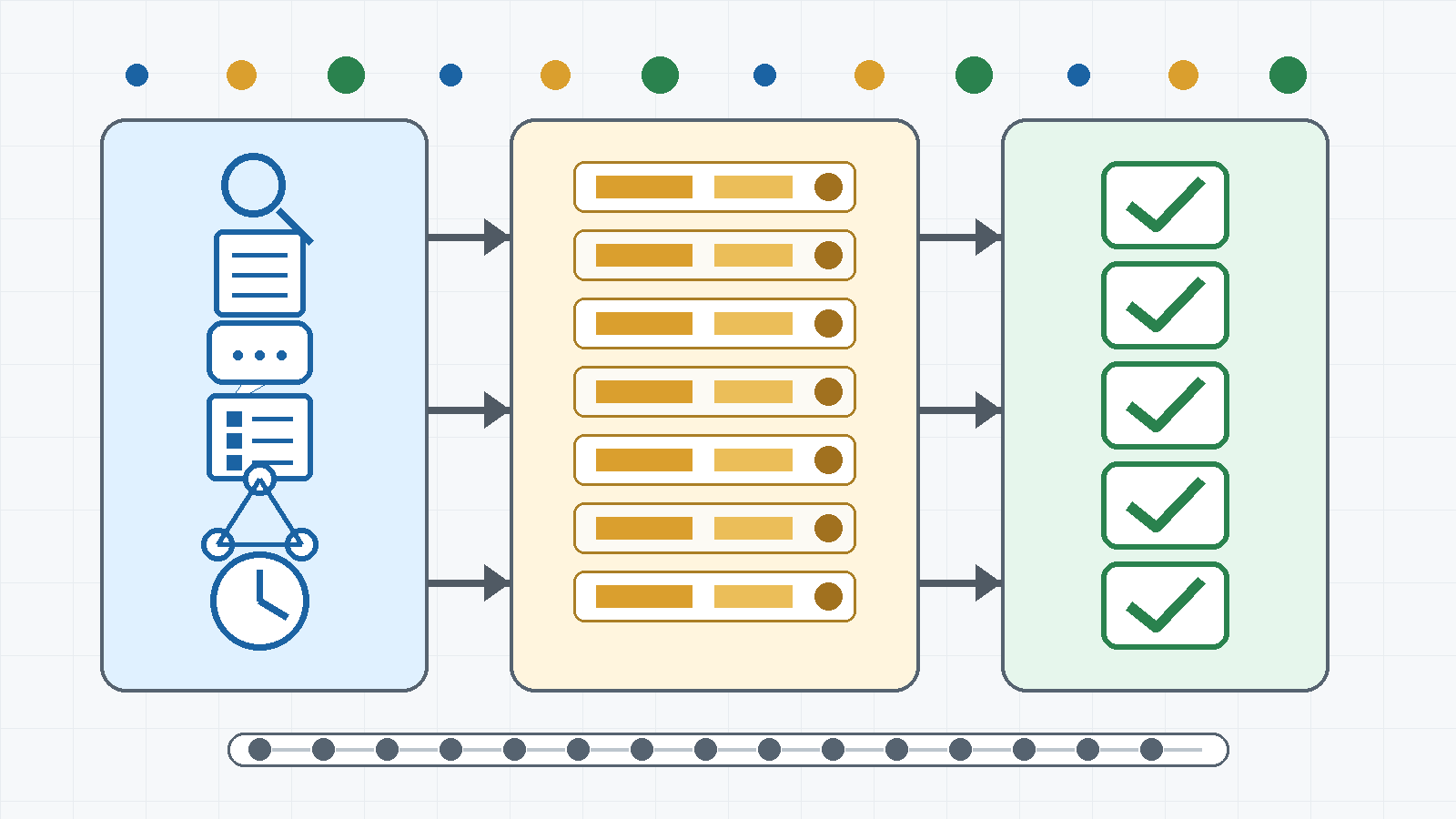
- Featured media is a site-owned permanent PNG, not media 7037, not a copied UI screenshot, and not a temporary generated-media URL.