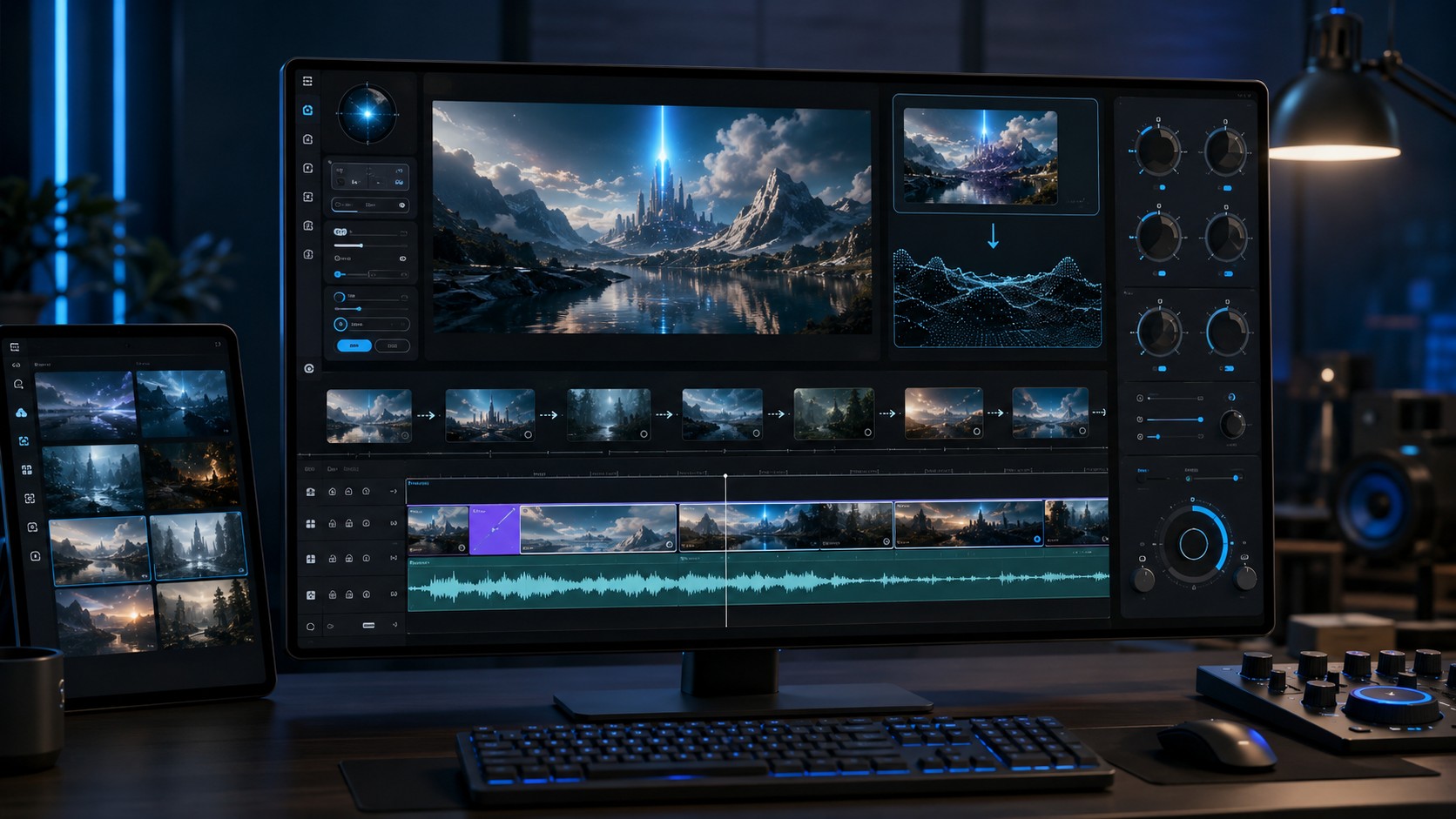
PixVerse V6 AI video generator is a timely model-led topic for creators who care about multi-shot video, camera control, native audio, and practical image-to-video workflows. PixVerse announced V6 on March 30, 2026, and the current SERP already shows model pages, API pages, and review content around the same long-tail phrase, which makes it a good single-post SEO opportunity for Makefun’s AI video coverage.
What PixVerse V6 Adds to AI Video Workflows
The official PixVerse V6 launch note frames the release around improved camera work, character performance, multi-shot generation, native audio, and CLI support for developer or agentic workflows. For searchers, that puts PixVerse V6 in the same evaluation set as newer model pages for Wan 2.7, Kling 3.0 Omni, Veo 3.1 Lite, and HappyHorse 1.0.
Where PixVerse V6 Fits Beside Image-to-Video Tools
Many AI video searches no longer ask only for text-to-video. They ask whether a model can hold a subject across shots, follow a camera direction, produce useful short-form clips, or combine visuals with synced sound. PixVerse’s own V6 review emphasizes 15-second 1080p stability, multi-shot storytelling, and native audio generation, while the fal PixVerse V6 API page exposes text-to-video and image-to-video routes with optional native audio.
For Makefun readers, the practical takeaway is workflow routing. Use a dedicated image-to-video workflow when the source image or product frame matters most. Use model-led prompts when the goal is a new scene, a motion test, or a cinematic concept. Use an all-in-one workspace when you need to compare PixVerse V6 against Wan, Kling, Veo, HappyHorse, or a music-first workflow like an AI music video generator from audio.
Creator Checklist for PixVerse V6 Prompts
- Start with the output format: landscape, vertical, square, product demo, short ad, or narrative clip.
- Specify camera motion with plain production language, such as push-in, orbit, tracking shot, low angle, or crane movement.
- Describe the subject continuity requirement if the same object, person, or character should survive multiple shots.
- Add audio intent separately: ambient sound, music mood, voice presence, or no sound.
- Keep a fallback model in mind when latency, cost, or prompt reliability matters more than one model’s headline feature.
FAQ
What is PixVerse V6?
PixVerse V6 is PixVerse’s 2026 flagship AI video model update, positioned around multi-shot generation, stronger camera control, character performance, and native audio support.
Is PixVerse V6 only for text-to-video?
No. Current PixVerse V6 coverage and API pages discuss both text-to-video and image-to-video workflows, which is why it fits creator searches that start from prompts, still images, or product frames.
How should creators compare PixVerse V6 with other AI video models?
Compare by workflow need: camera control, subject consistency, audio, clip length, cost, reliability, and iteration speed. A single model rarely wins every use case, so all-in-one model routing is usually safer for production work.