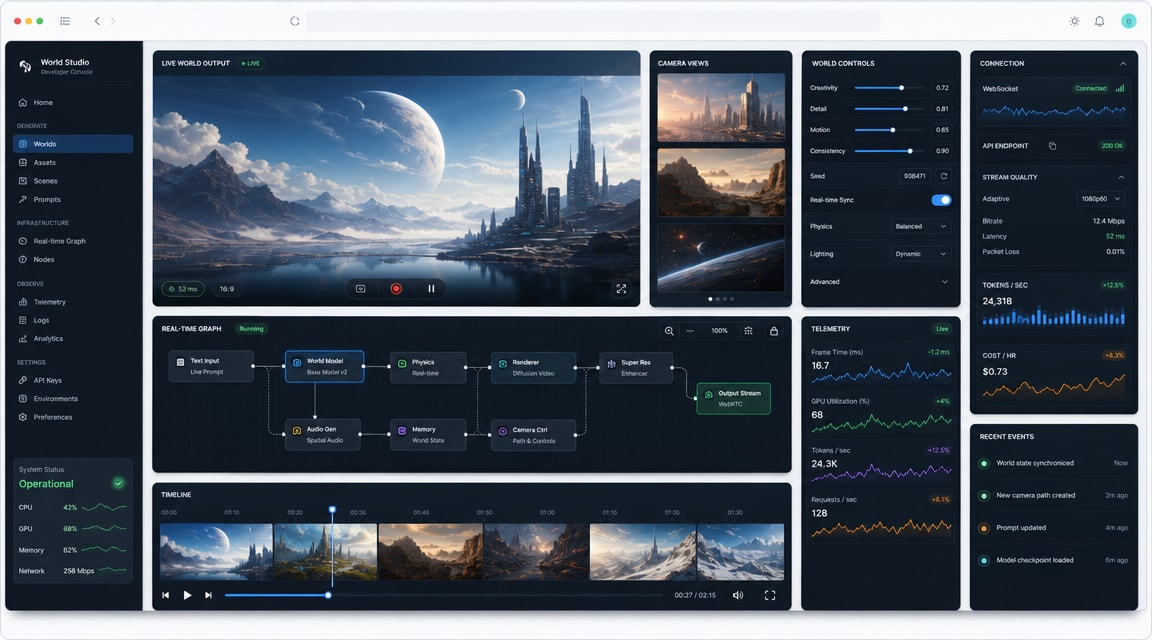
Reactor real-time AI world model is a timely SEO topic because the AI video market is moving beyond single generated clips toward interactive, low-latency worlds. Reactor emerged from stealth on May 28, 2026 with funding and a developer-platform angle: real-time generative video infrastructure for media, entertainment, physical AI, robotics, and interactive applications.
For Makefun readers, the practical search intent is clear. Creators already compare model quality, image-to-video tools, video agents, and API workflows. Reactor adds a different question: what happens when AI video needs to respond while the user is still interacting? That connects naturally to AI video API workflows, agentic video generation, PixVerse V6, and Runway MCP.
Why real-time AI worlds matter
Most AI video generator pages still focus on prompt-to-clip or image-to-video output. Real-time world models shift the job from rendering a finished asset to generating an environment that can change as a viewer, player, robot, or application takes action. That creates a different long-tail keyword cluster around real-time generative video, interactive AI video, AI world models, and developer infrastructure for video generation.
The opportunity is especially relevant because AI video search behavior is splitting into two lanes. One lane asks for polished clips, social videos, product teasers, avatars, and cinematic scenes. The other asks how to control video in a product, simulation, game-like interface, or agent workflow where latency and interactivity matter as much as visual quality.
How Reactor fits beside AI video generators
Reactor should not be framed as a direct replacement for creator-facing video tools. It is better understood as infrastructure for interactive generative video. That keeps the SEO angle neutral and avoids unsupported product claims. A Makefun user may still use a standard video generator for a finished clip, then watch the real-time world model category when they need an application that reacts continuously.
- Finished clip workflow: better for ads, explainers, thumbnails, social posts, and static campaign assets.
- Agent workflow: better when a system plans shots, selects models, or assembles a sequence from a brief.
- Real-time world workflow: better when users, cameras, objects, or simulated agents need responsive video output.
- API workflow: better when a team wants generation inside its own product rather than a standalone creative tool.
Competitor and market context
Reactor enters a market where Runway, PixVerse, Google Genie-style world models, Odyssey-style real-time models, and broader AI video platforms are all pushing toward more control and interactivity. The competitor observation is not that every platform does the same thing. It is that the category is expanding from “generate a video” to “generate a controllable visual system.”
That pattern supports a focused Makefun article because Makefun already has model-led and workflow-led coverage. Reactor gives the site a current bridge into real-time AI video infrastructure without changing core product positioning or making sensitive competitor claims.
How teams should evaluate real-time generative video
The most useful evaluation questions are operational. Does the system respond quickly enough for an interactive product? Can it keep spatial and visual consistency as the scene changes? Does the API support the controls a developer needs? Can the generated output be moderated, logged, and retried in a production workflow?
For near-term SEO, this article should position Reactor as a signal for where AI video demand is going: lower latency, more interaction, stronger developer tooling, and closer ties between video generation, world models, and AI agents.
FAQ
What is Reactor in AI video?
Reactor is a developer platform for real-time generative video and AI worlds, announced publicly on May 28, 2026 after emerging from stealth.
Is Reactor the same as a normal AI video generator?
No. A normal AI video generator usually creates a finished clip. Reactor is better framed as infrastructure for interactive generative video and real-time world model applications.
Why should creators care about real-time AI world models?
Real-time world models point to workflows where video reacts to input, camera changes, simulated agents, or application state instead of only rendering a static prompt result.
How does this fit Makefun’s AI video coverage?
It connects to Makefun’s AI video API, agentic video, PixVerse, and Runway MCP coverage by explaining the next workflow layer: interactive AI video systems that developers can build into products.