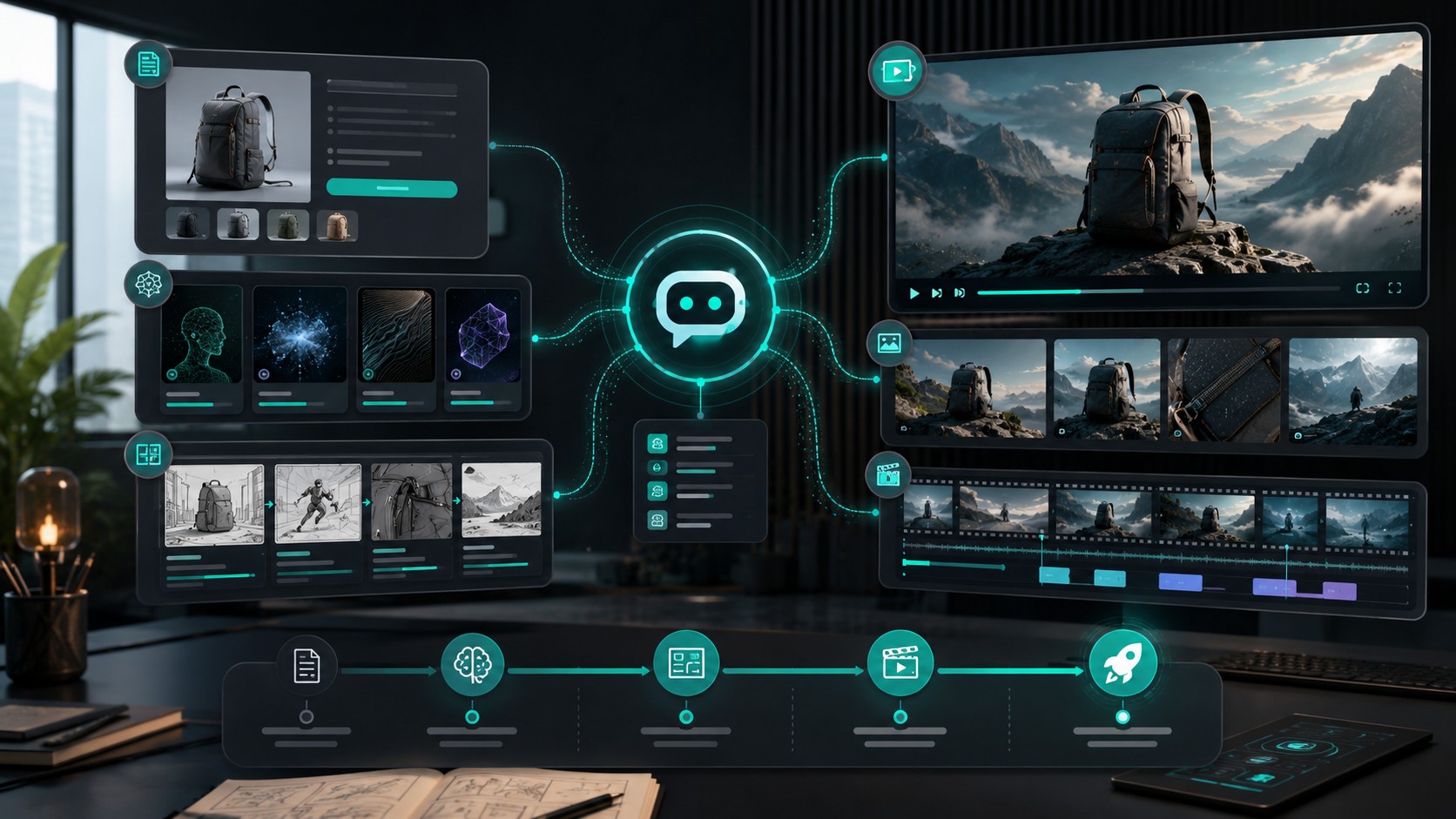
Runway MCP AI video generator is the strongest Makefun opportunity this hour because Runway moved AI video creation into the agent workflow itself. Instead of opening a separate video tool, creators can ask an MCP-compatible agent to turn a product link, reference image, or prompt into images, videos, product visuals, and marketing assets.
Runway announced Runway MCP on May 27, 2026, positioning it as a Model Context Protocol server that lets compatible agents and coding tools generate images and videos without switching context. The launch page also lists access to models such as Gen-4.5, Seedance 2.0, GPT Image 2, Kling 3.0, Veo 3.1, Nano Banana Pro, Gen-4 Image, and Gen-4 Turbo from the same agent workflow.
Why Runway MCP Matters For AI Video Search
Search intent around AI video is shifting from “which model is best” toward “which workflow gets a usable asset finished.” Runway’s MCP angle is not just another model launch. It targets the production layer: a creator can bring a product URL, image, or campaign brief into an agent conversation and ask for launch-ready visual assets. That is a natural long-tail fit for Makefun’s all-in-one AI creation coverage.
The official Runway MCP product page frames the workflow around generating images and videos from the tools creators already use, including Claude, ChatGPT, Cursor, and Replit. That makes the keyword useful for users comparing Runway Gen-4.5, Runway Aleph 2.0, GPT Image 2, and all-in-one AI video generator trends.
Competitor Signal: Agent-Native Creative Platforms
Runway is not alone in moving creative generation into agent workflows. Scenario’s MCP page describes a similar direction for production teams: image, video, 3D, audio generation, model training, and asset workflows accessible from an AI agent instead of separate manual tools. This validates the market signal without requiring Makefun to publish sensitive competitor claims.
For Makefun, the opportunity is to explain the workflow category in neutral terms: agent-native video generation, model routing, product URL to marketing video, storyboard review, and visual asset creation from the same conversation. That complements Makefun’s existing image-to-video and AI music video generator from audio content without duplicating any current post.
Where Runway MCP Fits In A Makefun Workflow
A practical creator workflow can start with a campaign brief or product page, ask the agent to produce a few storyboard directions, generate product images or short video concepts, and then review the output against the brand brief. If the first draft is close but needs targeted visual cleanup, users can move into an editing workflow like Runway Aleph-style video editing or regenerate a specific shot with a better source image.
This matters most for short-form ads, landing page hero media, product launch visuals, and iterative social clips. The key SEO angle is not that MCP replaces every creative tool. The useful framing is that MCP reduces context switching and makes the agent the control surface for model choice, prompt refinement, and asset handoff.
Runway MCP Workflow Checklist
- Start with a concrete asset brief: product page, image, target format, audience, and desired video length.
- Ask the agent for a storyboard before spending credits on final generation.
- Pick the model deliberately when quality, speed, editing control, or image fidelity matters.
- Review generated media for brand safety, product accuracy, text artifacts, and licensing constraints.
- Keep final Makefun publishing assets on permanent storage instead of temporary generation URLs.
Higgsfield MCP Workflow Cost Checkpoint
Higgsfield MCP is a useful comparison point for this Runway MCP workflow because it puts creative image and video generation behind an MCP client route instead of a standalone generator screen. As of July 16, 2026, the official Higgsfield MCP, pricing, and team-plan pages were reachable, and the Model Context Protocol documentation still provides the neutral protocol context for this workflow.
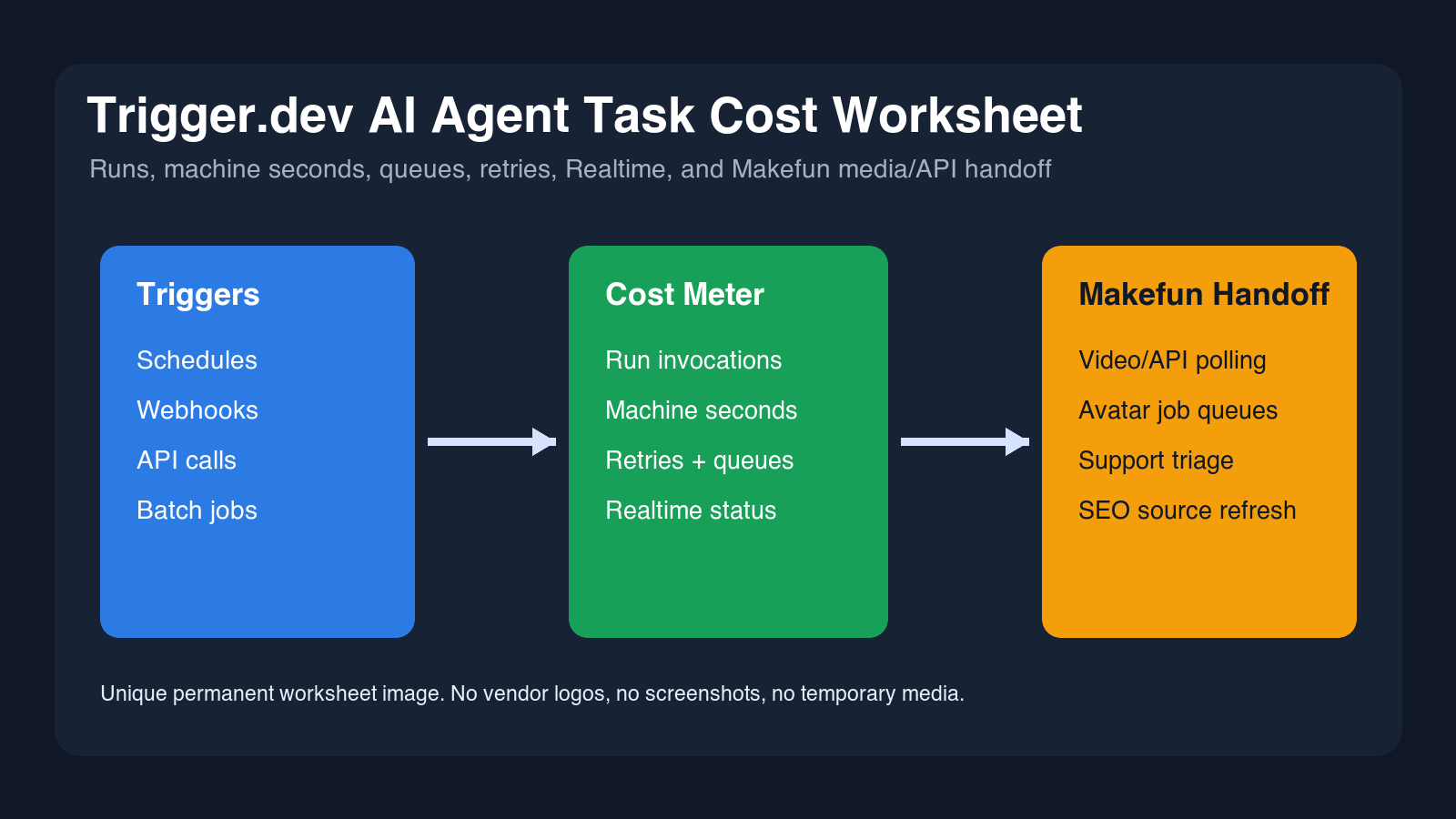
Use this section as a source-refresh checklist before quoting any Higgsfield cost claim. Confirm the live pricing page, then separate the subscription or credit row from model choice, prompt handoff, retry allowance, failed generations, team review, commercial-use review, export or storage handoff, and any direct API fallback.
| Workflow test | Cost-control rows to verify | When direct API may fit better |
|---|---|---|
| 5 social assets | Pricing refresh date, selected model, retry allowance, approval owner, export handoff. | When the team needs repeatable same-input runs or a fixed Makefun pipeline. |
| 20 campaign variants | Credits or subscription check, failed-generation policy, team review loop, storage path. | When batch controls, logging, or predictable routing matter more than chat context. |
| Weekly creative-agent workflow | MCP client setup, prompt handoff, commercial-use review, direct API fallback, publication-time source date. | When production needs an owned app flow rather than an agent conversation. |
Do not treat MCP as automatically cheaper, faster, or higher quality than a direct video API. The practical comparison is workflow control: MCP can reduce context switching inside an agent, while a direct API path can be easier to meter, batch, and audit for recurring Makefun production.
FAQ
What is Runway MCP?
Runway MCP is Runway’s Model Context Protocol server for generating images and videos from MCP-compatible agents and coding tools without leaving the current workflow.
Is Runway MCP a new video model?
No. It is a workflow and connector layer that exposes Runway generation capabilities and model access through compatible agents.
Why is Runway MCP relevant to AI video generators?
It changes the user workflow from opening a standalone generator to asking an agent to plan, create, and revise visual assets from a product link, prompt, or image.
How should Makefun users compare MCP workflows with normal AI video tools?
Use MCP workflows when speed, context, and iteration across multiple assets matter. Use standalone tools when a creator needs direct manual control over every generation setting.