Unstructured Platform pricing planning starts with page equivalents. For a Makefun source-refresh or RAG-prep workflow, model the remaining free-page allowance, Pay-As-You-Go pages, routing strategy, connector cadence, chunking, enrichment, embedding provider cost, destination loading, retries, and any Business deployment requirement before comparing it with parser-only or managed RAG alternatives.
Source snapshot for June 5, 2026: the current Unstructured pricing page, UI overview, API workflow overview, and Pipelines overview were reachable during publication checks. The article does not rely on Mistral numeric pricing rows because the live Mistral pages returned SSL/timeout errors in this run.
Unstructured is a page pipeline, not just OCR
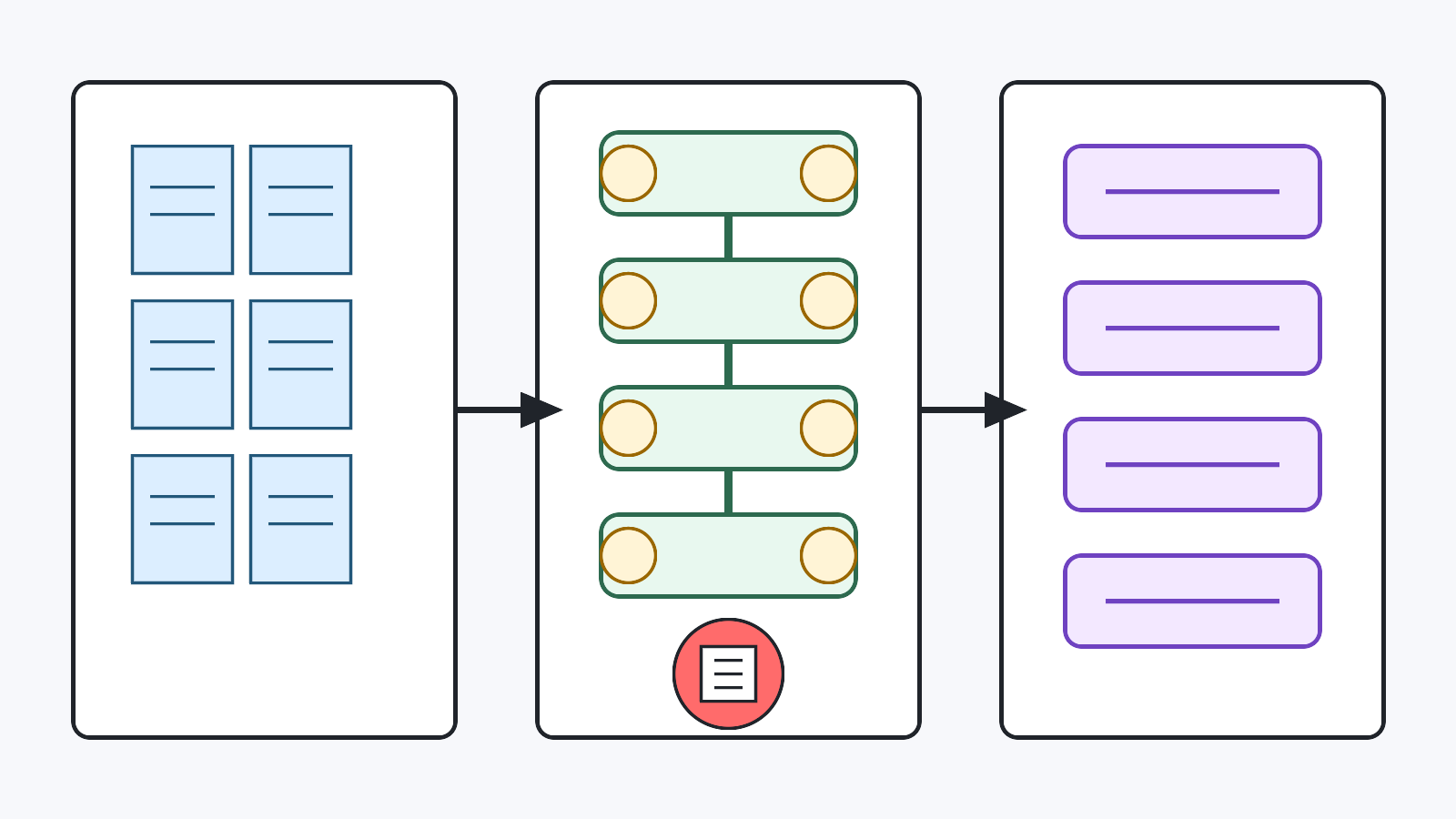
The useful calculator question is not only “how much is one OCR page?” Unstructured can sit earlier in the pipeline: source connectors bring documents in, partitioning turns files into structured elements, workflow jobs apply transformations, optional enrichment and embedding steps prepare data for retrieval, and destination connectors move the output into the next system.
That means the worksheet should separate the platform page bill from the surrounding operating costs: embedding tokens, vector or destination storage, source connector maintenance, reprocessing, duplicate source churn, manual QA, and editor handoff time.
Page-equivalent worksheet
Use the current Unstructured pricing page as the live input for the free-page allowance and Pay-As-You-Go page price, then normalize the workload into page equivalents before applying any routing or retry assumptions.
- PDF and scanned files: count monthly document pages, then add a reprocess percentage for source changes and extraction failures.
- PPTX and image-heavy files: keep slide or image pages separate because they may route differently than plain text.
- DOCX and office files: use page metadata where available, then apply a QA row when the source lacks stable pagination.
- Non-file data: convert source snippets, exports, or API payloads into page-equivalent chunks before adding them to the monthly batch.
- Retries: include failed-source retries, scheduled refreshes, and duplicate connector updates as separate multipliers.
Routing worksheet: Auto, VLM, High Res, and Fast
Keep the routing row visible even when the first draft only uses blended estimates. Text-first files, table-heavy pages, screenshot evidence, and image-heavy PDFs do not have the same quality or review profile. A practical worksheet uses four columns: pages routed by Auto, pages expected to need VLM behavior, pages requiring High Res treatment, and pages that should stay on a faster text-focused path.
For Makefun, this protects the article from a common pricing mistake: treating a support export, a vendor pricing page, a PDF table, and a screenshot batch as the same unit of work. The cost model should show why a simple source-refresh batch can stay light while an evidence-heavy media or pricing audit may require more expensive review and QA.
Connector, chunking, enrichment, embedding, and destination rows
The Unstructured bill is only one line in the pipeline. Add separate rows for:
- source connector count and refresh cadence,
- workflow jobs and scheduled reruns,
- chunking strategy and chunk review,
- table, image, or entity enrichment,
- embedding provider tokens,
- destination connector or vector-store storage,
- manual QA, source-date labels, and editor handoff.
Those rows make the calculator useful for Makefun SEO operations because source refreshes often combine pricing pages, docs, screenshots, support exports, transcripts, and internal notes before a page is ready for publication.
Makefun scenarios
SEO source-refresh batch
Model 2,000 official pricing and documentation pages plus 500 page-equivalent snippets from source extracts. Subtract any remaining free pages, apply the live Pay-As-You-Go rate, and then add connector refreshes, retries, embedding cost, destination storage, and editor QA.
Support knowledge-base connector pipeline
For 10,000 help-center, PDF, DOCX, screenshot, and ticket-export page equivalents refreshed weekly, add scheduled connector updates, duplicate-source churn, privacy review, and any Business deployment requirement. The buying path may shift from simple Pay-As-You-Go planning to custom deployment if the workflow needs dedicated infrastructure or in-VPC handling.
Image-heavy evidence extraction
For 1,200 image-heavy PDF, screenshot, table, and media-metadata pages, split the batch by expected routing path. Add manual table cleanup and source verification time instead of claiming that every page behaves like plain text OCR.
Same-use comparison frame
Compare Unstructured only after normalizing the workload. A parser page, an OCR page, a managed RAG ingestion unit, and a retrieval-token cost are not the same unit.
- LlamaParse Auto Mode Agentic Parse Credit Cost Calculator can be used for parser-credit comparison when the same pages and parse modes are modeled.
- Ragie Managed RAG Connector MCP Cost Calculator belongs in the managed ingestion and retrieval comparison, not as a direct page-price substitute.
- Pinecone Assistant Context Token RAG Cost Calculator helps separate document-prep spend from retrieval and query-layer spend.
- Datalab Marker Page OCR Extraction Cost Calculator is useful for document-intelligence adjacency when its live canonical remains available.
- Voyage AI Contextualized Chunk Rerank Token Cost Calculator belongs in the downstream chunking, rerank, and retrieval-quality row.
For Mistral OCR or cloud Document AI rows, refresh official pages again in the next update before adding exact numbers. This publication run intentionally avoids current Mistral pricing claims because live checks did not return a usable official response.
Business deployment row
Add a Business deployment row when the workflow needs a dedicated instance, in-VPC path, bare-metal deployment, custom plugins, custom model hosting, support requirements, or privacy controls that make the cost sales-led. Do not blend that row into Pay-As-You-Go page math.
Publisher checklist
- Refresh Unstructured pricing and documentation before publishing numeric rows.
- Keep source-date labels beside pricing-sensitive statements.
- Separate Unstructured platform cost from embedding, vector storage, destination loading, and manual QA.
- Do not claim cheapest, best, most accurate, most secure, or most compliant without same-scenario evidence.
- Use only topic-specific permanent featured media owned by Makefun.
FAQ
What should an Unstructured pricing calculator include?
Include free pages, paid page equivalents, page calculation rules, Auto/VLM/High Res/Fast routing, connector cadence, retries, chunking, enrichment, embedding provider cost, destination loading, Business deployment, and editorial QA.
Is Unstructured cheaper than LlamaParse or OCR tools?
Do not use a blanket cheapest claim. Normalize the same pages, parse or OCR mode, connector schedule, chunking, enrichment, embedding, destination, deployment, and manual QA requirements before comparing alternatives.
When should Makefun model Business deployment?
Add a Business row when privacy, dedicated infrastructure, in-VPC hosting, custom plugins, custom model hosting, or support requirements move the buying path away from simple self-serve page pricing.
Primary sources checked: Unstructured pricing, Unstructured UI overview, Unstructured API workflow overview, Unstructured Pipelines overview, and LlamaIndex pricing.