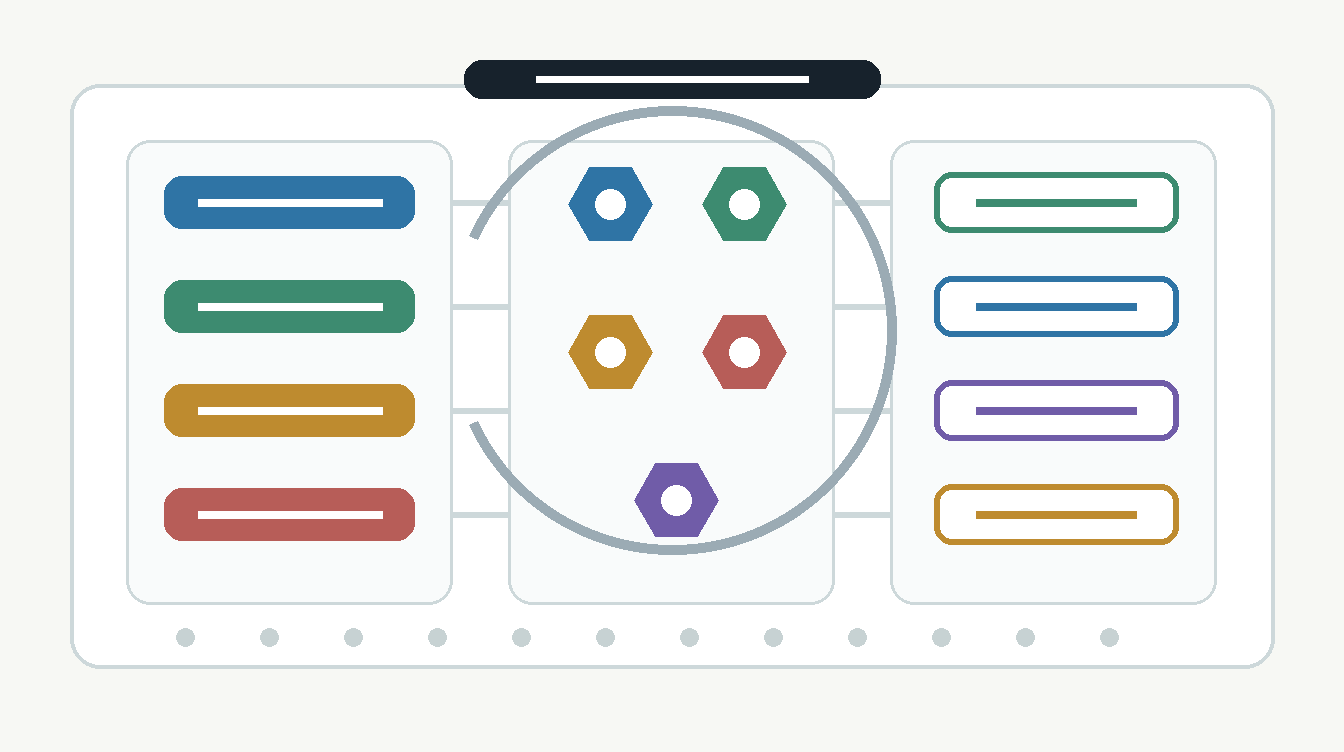
As of June 5, 2026, a Voyage AI pricing calculator should begin with the retrieval route: standard embeddings, voyage-context-3 contextualized chunk embeddings, multimodal embeddings, or reranking. The worksheet then adds document tokens, query tokens, image-equivalent inputs, rerank candidate depth, free-token allowance, rate limits, retries, vector storage, LLM generation, and Makefun review.
The short answer: Voyage cost planning is a retrieval ledger, not a generic RAG vendor list. Use official pricing for the current model row, then normalize the same workflow before comparing Voyage with rerankers, managed RAG, search APIs, or provider-native embedding routes.

Voyage official source snapshot
Publisher refreshed the official Voyage pricing page, contextualized chunk embedding docs, reranker docs, rate-limit page, embedding docs, and multimodal embedding docs. Treat those pages as the current source of truth because model names, free allowances, image examples, and limits can change.
| Worksheet row | Voyage input | Makefun caveat |
|---|---|---|
| Text embeddings | Document tokens, query tokens, selected embedding model, output dimension where supported, free-token allowance, retries, and reprocess rate. | Add vector storage, crawler cost, LLM generation, and editorial QA outside the Voyage bill. |
| Contextualized chunks | Document count, chunks per document, chunk tokens, voyage-context-3 context window, input constraints, output dimensions, and batch cadence. | Use this only when long documents need chunk embeddings that carry document-level context. |
| Multimodal inputs | Image or document screenshot buckets, paired text tokens, metadata rows, free-token allowance, and retrieval use case. | Refresh image-equivalent examples before making any numeric claim. |
| Reranking | Query tokens multiplied by document count, plus all candidate document tokens, selected reranker, top-k depth, retries, and eval calls. | Candidate count and chunk length can dominate spend even when embedding cost looks small. |
Embedding and contextualized chunk formula
embedding_monthly = document_tokens + query_tokens + contextualized_chunk_tokens + multimodal_equivalents - free_allowance + retries + evals
- Keep normal text embeddings and voyage-context-3 rows separate because they answer different retrieval problems.
- Model output dimension as a storage and recall tradeoff, not as a universal quality claim.
- Add rate-limit constrained batch windows when source refresh or support search has scheduled runs.
- Record vector database, source crawling, LLM answer generation, and Makefun QA as non-Voyage rows.
Reranker processed-token worksheet
rerank_processed_tokens = query_tokens * documents_reranked + sum(candidate_document_tokens). This formula makes candidate depth, chunk length, and failed retries visible before a team chooses top-20, top-50, or top-100 reranking.
| Scenario | Volume to model | Decision check |
|---|---|---|
| SEO source refresh | 50,000 official docs chunks, 10,000 research queries, top-50 candidates, and 10 percent retry or evaluation overhead. | Use reranking only when better source selection justifies the processed-token row. |
| Support search | 4,000 long help-center documents, 12 chunks per document, 15,000 queries, and rerank top-30 for low-confidence searches. | Use contextualized chunks when document context matters inside each chunk. |
| Media metadata retrieval | 8,000 screenshots or tables, paired text metadata, and 2,500 editorial queries. | Use multimodal embeddings only when images or tables are first-class retrieval inputs. |
Same-use comparison lanes
Use adjacent Makefun pages as comparison lanes, not same-intent duplicates: Cohere Rerank Model Vault Private Search Cost Calculator for reranking economics, Ragie Managed RAG Connector MCP Cost Calculator for managed RAG connector cost, Pinecone Assistant Context Token RAG Cost Calculator for assistant context-token planning, Brave Search API LLM Context Answers Cost Calculator for search-to-answer context, Requesty AI Gateway Cache Routing Cost Calculator for gateway cache and routing, and Gemini Batch API Context Cache Cost Calculator for provider-native batch and cache rows.
Jina, Unstructured, and DataForSEO were excluded from the final body link set in this run because their candidate Makefun URLs returned 404 during publication checks. They can be added later only after canonical public pages return 200.
Risk controls
- Refresh Voyage pricing, contextualized chunk docs, reranker docs, multimodal examples, and rate limits before reusing this worksheet.
- Do not claim Voyage is cheaper, better, more accurate, safer, or more compliant without current same-scenario evidence.
- Separate Voyage spend from vector storage, crawler work, document parsing, LLM generation, manual QA, and WordPress publication checks.
- Keep the page Voyage-specific; do not turn it into a generic RAG stack roundup.
- Verify duplicate intent, blog category id 2, Yoast fields, sitemap, body links, and unique permanent media before success notification.
FAQ
How should a Voyage AI cost calculator start? Start with the workflow route: standard embeddings, contextualized chunk embeddings, multimodal embeddings, or reranking. Then add document tokens, query tokens, candidate count, image-equivalent inputs, free-token allowance, retries, rate limits, vector storage, LLM generation, and Makefun QA.
What makes Voyage reranker cost different from embedding cost? Reranker pricing is based on processed tokens. The worksheet should multiply query tokens by document count, then add all candidate document tokens before applying the selected reranker row.
When should Makefun model voyage-context-3 separately? Model voyage-context-3 separately when long docs, PDFs, transcripts, support pages, or official pricing pages need chunk embeddings that preserve document context. Standard embeddings are still simpler for short pages or simple snippets.