As of June 5, 2026, a Vellum workflow cost calculator should not stop at the platform fee. It should separate credits, machine and storage choices, workflow executions, Prompt Nodes, Subworkflows, Map iterations, sandbox runs, online evaluations, observability, release reviews, protected tags, provider tokens, non-LLM calls, cached-token caveats, auto-reload controls, and Makefun human QA.
The short answer: use Vellum’s pricing and product docs as the source of truth, then model workflow governance separately from raw model-token spend. Vellum can be useful when prompt or workflow releases need evaluation evidence, approval controls, and production observability before an SEO, support, media, or editorial automation changes behavior.

Vellum source snapshot for the calculator
Publisher checks reached the official Vellum pricing docs, pricing page, workflow execution cost tracking docs, online evaluation docs, release review docs, and observability docs. Same-use context also refreshed LangSmith, Langfuse, and Braintrust pricing pages. Treat those pages as the current source for plan, credit, storage, machine, execution, evaluation, and review wording.
| Cost row | What to model | Makefun caveat |
|---|---|---|
| Plan and platform | Base or Pro plan, platform fee, machine size, storage tier, and whether a self-hosted or cloud surface applies. | Do not mix product surfaces without naming the source and refresh date. |
| Credits and top-ups | Credit balance, paid usage, top-up amount, auto-reload threshold, optional monthly cap, web search, image generation, and managed third-party API usage. | Keep credits separate from provider bills and human review time. |
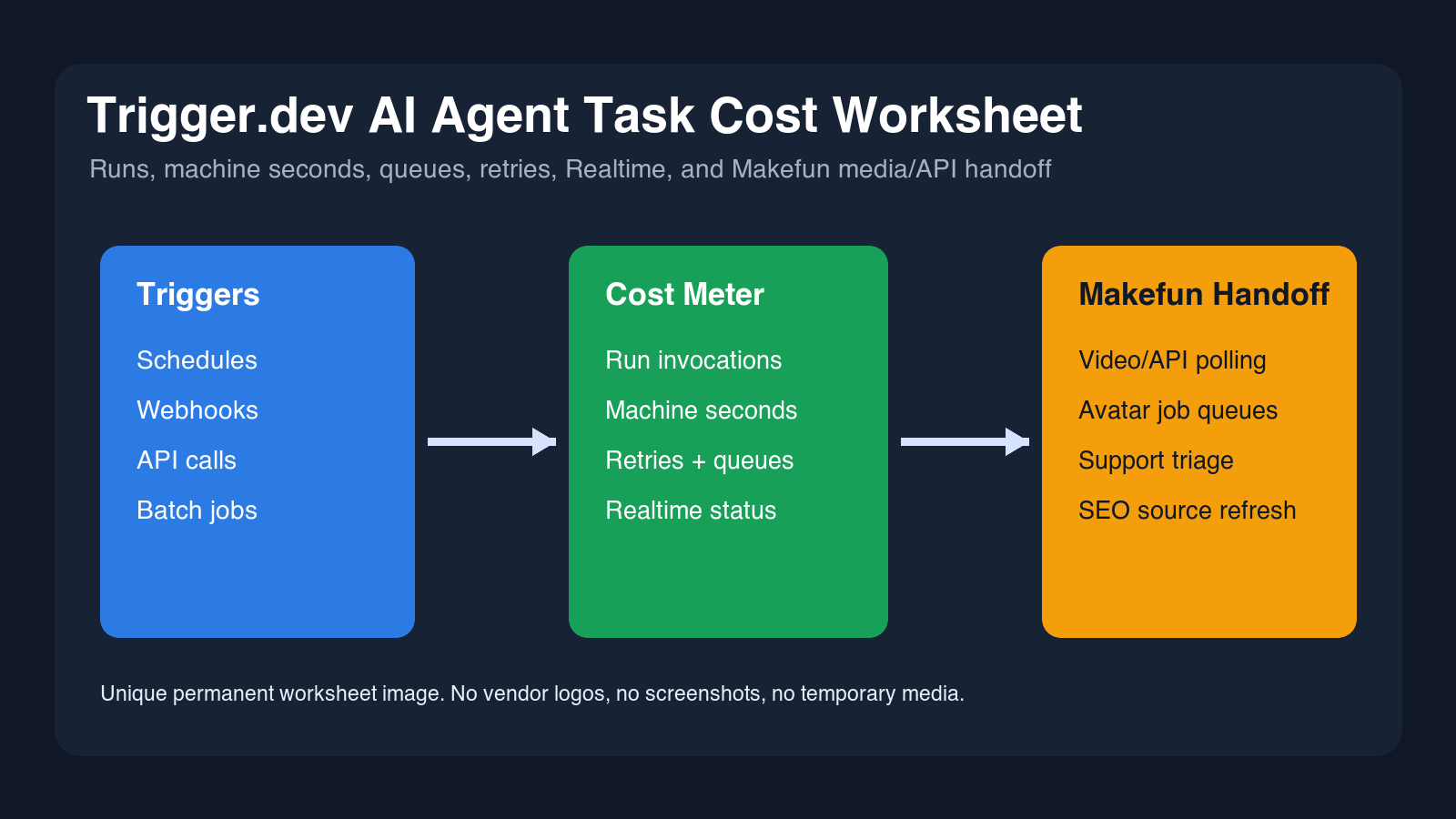
| Workflow execution | Prompt Nodes, Subworkflows, Map iterations, deployed executions, sandbox runs, and workflow cost tracking limits. | Official docs identify non-LLM operations and cached provider-token behavior as separate caveats. |
| Online evaluations | Evaluation sample rate, metrics per execution, production deployment coverage, and release churn when metrics change. | Evaluating every run can multiply cost and review work. |
| Release governance | Release reviews, protected tags, reviewer count, change requests, history review, and approval time. | This is operational cost, not a model-token line item. |
Calculator formula
monthly_cost = Vellum_plan_fee + machine_storage_rows + credit_usage + workflow_LLM_operations + sandbox_runs + online_eval_samples + provider_tokens + non_LLM_API_costs + cached_token_adjustment + release_review_minutes + protected_tag_rework + Makefun_QA_and_publication
Use the formula as a worksheet, not a universal quote. It deliberately keeps Vellum platform rows, provider tokens, non-LLM calls, cached-token gaps, release-review labor, and WordPress publication work visible before a team treats workflow execution tracking as the whole budget.
Worksheet 1: workflow execution cost tracking
- Start with monthly Workflow Deployment executions, Prompt Nodes per execution, Subworkflows, and Map Node iterations.
- Add sandbox runs before each release because testing and node mocking can be material before production traffic starts.
- Separate non-LLM API calls, web search, image generation, storage, and support-tool side effects from Vellum workflow cost tracking.
- Keep cached provider-token savings or misses outside the Vellum tracking row unless the official docs explicitly account for them.
- Add Makefun source-refresh, duplicate-check, media-QA, and editor-review minutes outside the vendor bill.
Worksheet 2: online evaluation sampling
Online evaluations are most useful when they catch production-quality regressions without evaluating every low-risk run. Model monthly deployment executions, sample rate, metrics per sampled execution, expected escalation share, and reviewer minutes per failed metric.
| Scenario | Sample row | Decision |
|---|---|---|
| SEO source refresh | Daily workflow runs with sampled pricing-source extraction metrics and human review for failures. | Use Vellum when evaluation evidence is needed before updating a published cost page. |
| Support triage | Sample higher-risk support categories and keep low-risk classification logs separate. | Use protected releases when prompt changes affect customer-facing answers. |
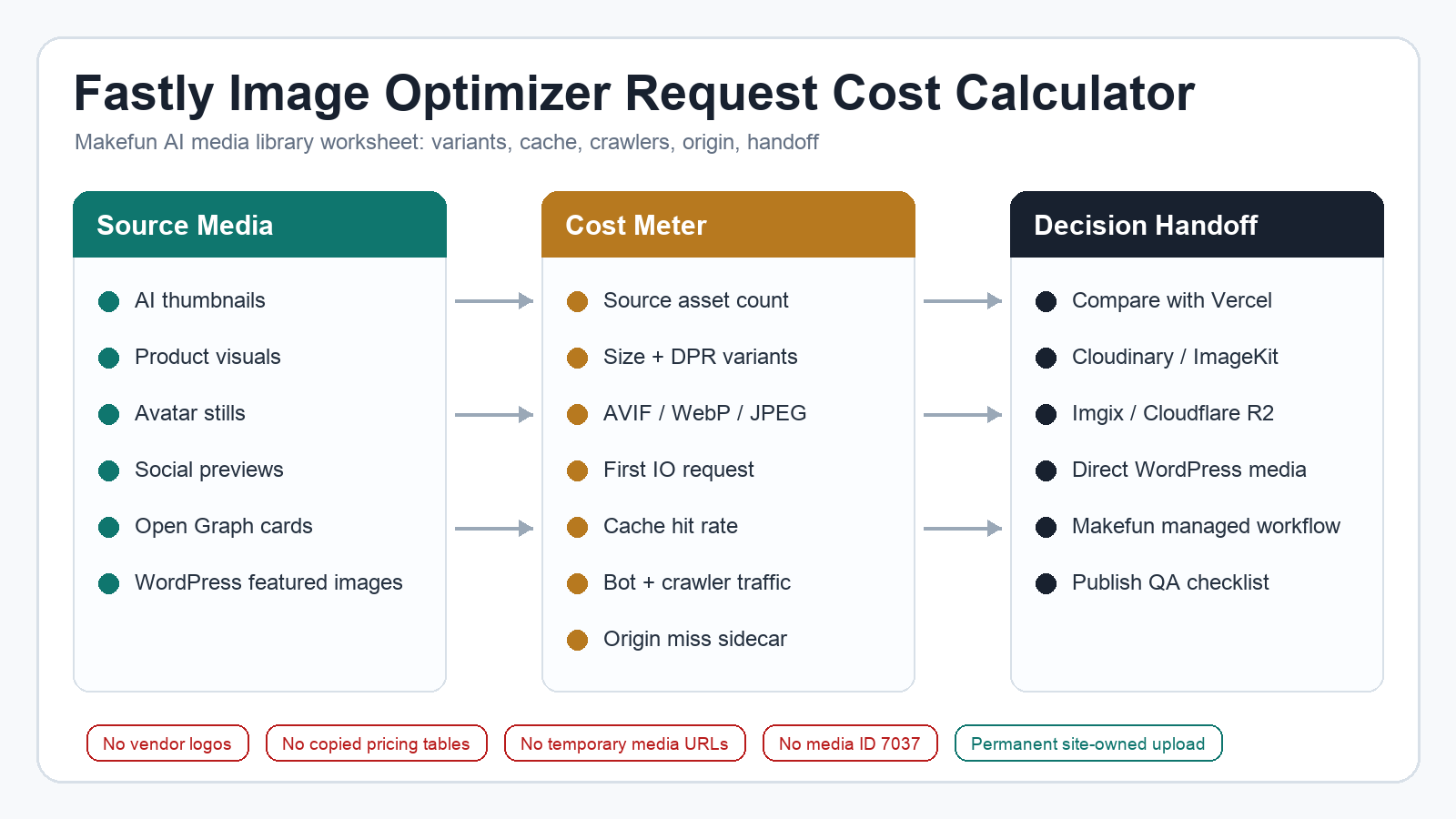
| Media metadata QA | Evaluate only a subset of Map iteration outputs and route visual-risk cases to manual review. | Keep image generation, storage, and copyright checks as separate rows. |
Sandbox tests, node mocking, and cache caveats
- Sandbox testing belongs in the development budget before a workflow is promoted.
- Node mocking can reduce some test costs, but it also requires setup and QA time.
- Cached-token economics should be modeled with provider pricing, not hidden inside the Vellum row.
- Retries and failed executions need review rows when they can touch SEO copy, support messages, or media metadata.
Release review and protected-tag governance
Release reviews turn workflow changes into an approval process. For Makefun, that matters when a prompt, metric, or workflow release can change source-refresh behavior, support triage, media metadata, or final article QA. Add reviewer count, approval time, change-request rework, protected-tag enforcement, and release history review before comparing Vellum with trace-only or eval-only tools.
Same-use comparison rows
Use adjacent Makefun pages as comparison lanes, not same-intent duplicates: Temporal Cloud Actions Storage Workflow Cost Calculator for durable workflow operations, Requesty AI Gateway Cache Routing Cost Calculator and Portkey AI Gateway Guardrails Log Overage Cost Calculator for gateway and guardrail rows, Gemini Batch API Context Cache Cost Calculator, Claude Batch API Prompt Cache Cost Calculator, and Groq Batch Flex Prompt Cache Cost Calculator for direct-provider cache and batch alternatives, and Pinecone Assistant Context Token RAG Cost Calculator for adjacent RAG assistant context economics.
LangSmith, Langfuse, Braintrust, Humanloop, PromptLayer, Helicone, Portkey, OpenPipe, promptfoo, OpenAI Evals, and self-hosted workflow governance should be compared only after refreshing the same workload: execution count, trace or span retention, eval runs, seats, provider tokens, release approvals, storage, and human review. Do not turn those rows into a cheapest, best, safest, fastest, or most reliable claim without current same-scenario evidence.
Publisher checklist and risk controls
- Refresh official Vellum pricing, pricing page, workflow execution, online evaluation, release review, and observability docs immediately before publication.
- Name the product surface when using platform, assistant, machine, storage, credit, or self-hosting rows.
- Keep provider tokens, non-LLM APIs, cached-token caveats, online-evaluation multiplication, and human approval time separate.
- Exclude internal links whose bare canonical URL is still 404, even if a cache-busted URL or sitemap later recovers.
- Verify duplicate intent, category blog id 2, Yoast fields, sitemap, body links, and unique permanent media before public success notification.
FAQ
What should a Vellum workflow cost calculator include? Include Vellum credits, machine and storage tier choices, workflow executions, Prompt Nodes, Subworkflows, Map iterations, sandbox runs, online metric evaluations, release reviews, protected tags, provider model tokens, non-LLM API calls, cached-token caveats, and human QA time.
Does Vellum workflow execution cost tracking cover every workflow cost? No. The official docs frame workflow cost tracking around LLM operations and note limitations for non-LLM operations and cached provider tokens, so the worksheet should model those rows separately.
When is Vellum a better fit than an observability-only tool? Use Vellum when the decision needs workflow building, online evaluations, release reviews, protected release tags, and deployment governance in one operational worksheet. Use observability-only or provider-native rows when the team only needs traces or raw token spend attribution.